
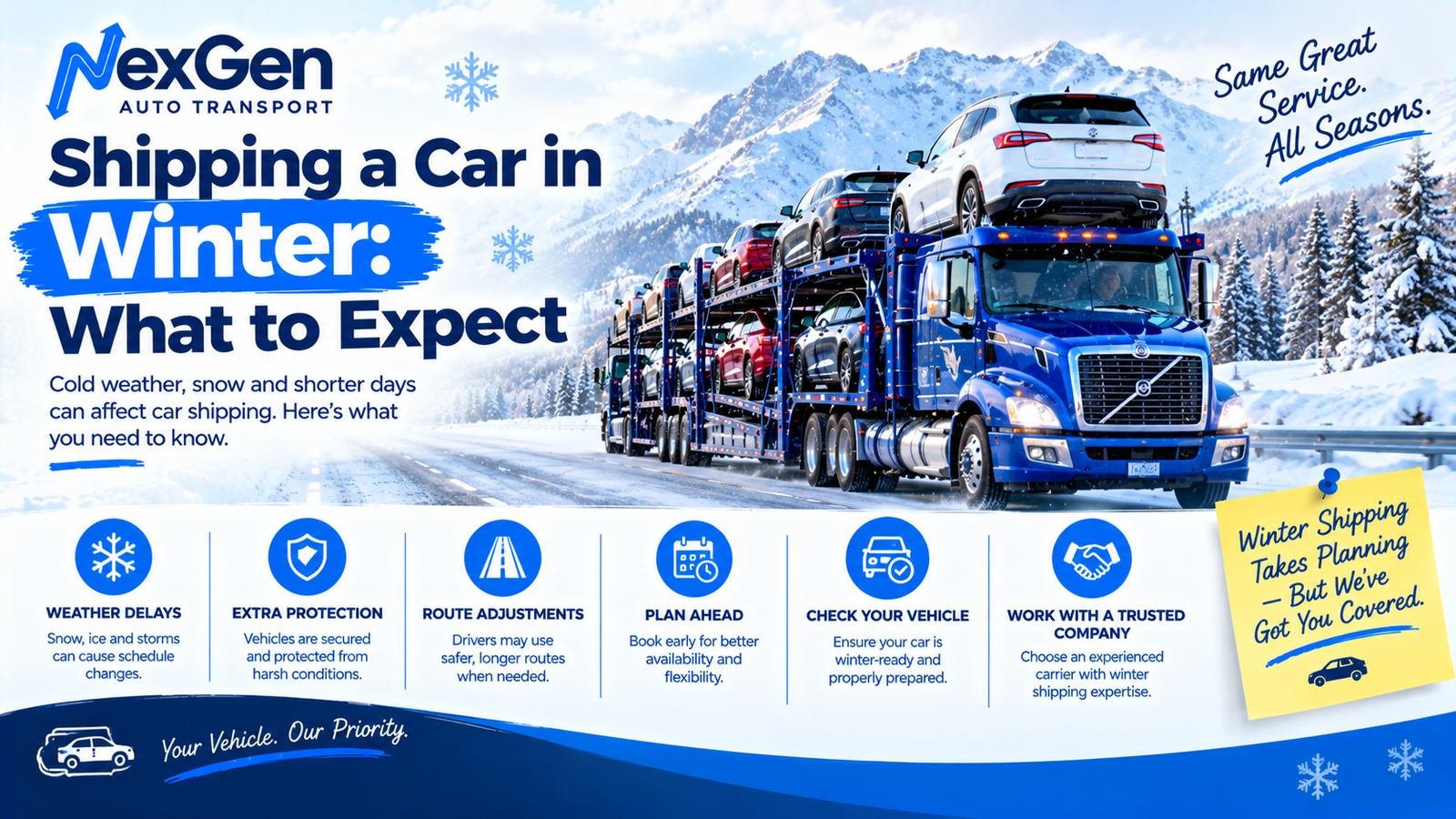
Short answer: Yes, you can safely ship a car in winter, but expect possible weather delays, more exposure to road salt on open carriers, and prices that are often lower in snow-free off-season months but can be higher on snowy routes and around the holidays. Book 2 to 4 weeks ahead, choose a flexible pickup window, consider enclosed transport for valuable cars, and prepare your car for cold weather. Plan extra time, because storms and mountain pass restrictions can add days to the trip.
Last updated: October 17, 2026 | Reading time: about 9 minutes
Key Takeaways
- Safety: winter shipping is common and safe when drivers and carriers manage conditions properly.
- Timing: delays are more likely. In bad conditions a trip can take an extra 2 to 3 days.
- Price: demand often drops, which can lower prices, but snowy routes, holidays, and snowbird flows can push them up.
- Protection: open carriers expose your car to snow, salt, and sand. Enclosed transport avoids this.
- Prep: check the battery, coolant, and tire pressure, and photograph your car before pickup, even if it is dirty.
- Flexibility matters more in winter than in any other season.
What’s in This Guide
- Is It Safe to Ship a Car in Winter?
- Weather Delays: What to Expect
- Does Winter Car Shipping Cost More or Less?
- Winter Risk by Region and Route
- Open vs. Enclosed Transport in Winter
- Cold-Weather Preparation Checklist
- Pickup and Delivery in Snow
- Booking Tips for Winter Shipments
- Insurance and Weather
- How NexGen Handles Winter Shipping
- Frequently Asked Questions
Is It Safe to Ship a Car in Winter?
Yes. Carriers haul vehicles every winter, and most cars arrive on time and undamaged. The main differences from other seasons are that drivers must slow down in snow and ice, routes through mountains can be restricted, and open trailers put your car in direct contact with road salt, sand, and ice melt. A good carrier will not drive when conditions are unsafe, which can lengthen the trip but protects your car.
What makes winter shipping smoother is mostly on your side: a flexible schedule, a car that is ready to go, and a company that tells you honestly what to expect. See how to choose a car shipping company and auto transport broker vs. carrier.
Weather Delays: What to Expect
Winter shipping is one of the most unpredictable times of year. Common causes of delay include:
- Snow and ice storms that slow or stop trucks on major highways.
- Mountain pass restrictions. When chains are required, trucks may crawl at roughly 20 to 30 miles per hour, and drivers can be fined for not complying.
- Road closures from crashes, wind, or avalanche control.
- Federal driving-hour limits. Time spent stuck in traffic counts toward a driver’s limit, so delays can compound. See the FMCSA hours-of-service rules.
- Unplowed pickup spots. A truck cannot always get into a snowy street or driveway.
How much extra time should you plan?
| Conditions | Typical Impact on Transit |
|---|---|
| Mild weather, southern routes | Little or no change |
| Light snow or cold snaps on northern routes | Often 1 or more extra days |
| Major storm or mountain pass closures | Can add 2 to 3 days or more |
As a rule, build a few days of buffer into any winter plan. For standard timelines, see how long it takes to ship a car. If you have a firm deadline, ask about expedited auto transport and emergency car shipping, but remember that no one can control the weather.
Does Winter Car Shipping Cost More or Less?
It depends on where and when. Winter is generally a slower season for car shipping, so carriers have empty space on their trailers and compete for loads. That can mean lower prices, sometimes by a few hundred dollars, especially on routes without much snow. But three things can push prices up:
- Snowbird demand. Southbound routes to Florida, Arizona, and Texas are busy from October to January. See snowbird car shipping and New York to Florida car shipping.
- Holiday weeks. The weeks around Thanksgiving, Christmas, and New Year are busy, and fewer drivers are available.
- Hard-to-reach snowy areas. Carriers may charge more to go where roads are closed or slow.
- Fuel costs. Diesel is high in 2026, which affects every season. See why car shipping is so expensive in 2026.
| Period | Typical Price Pattern | Weather Risk |
|---|---|---|
| October to January, southbound | Higher (snowbird demand) | Moderate |
| Holiday weeks | Higher | Moderate to high |
| January to February, snow-free routes | Often lowest | Low |
| January to February, northern routes | Often lower, with possible surcharges | High |
| Late February to March | Rising ahead of spring demand | Moderate |
Learn the whole year in the cheapest time of year to ship a car, and find savings ideas in the cheapest way to ship a car. Prices here are patterns, not quotes. Get a free quote for your route.
Planning a winter shipment?
Free quote, no upfront deposit, licensed FMCSA broker.
Get My Free Quote or call +1 (832) 886-1321
Winter Risk by Region and Route
| Region | What to Expect | Delay Risk |
|---|---|---|
| Northeast and Great Lakes | Nor’easters, lake-effect snow, ice, and heavy road salt | High |
| Rocky Mountains and northern Plains | Mountain passes, high winds, and frequent closures | High |
| Sierra Nevada and Pacific Northwest passes | Chain controls and storm closures | Moderate to high |
| Mid-Atlantic and Midwest | Intermittent snow and ice | Moderate |
| South and Southwest | Mostly mild, with occasional freezes or ice storms | Low to moderate |
| Florida and the Gulf Coast | Mild weather, but heavy snowbird traffic | Low |
Southern corridors, such as Los Angeles to Houston along I-10, tend to avoid heavy snow. Northern and mountain routes, such as Michigan to California or New York to California, carry more winter risk. Check live conditions from the National Weather Service, Caltrans QuickMap, WYDOT, and COtrip. See also our state pages for Colorado, Michigan, Minnesota, Illinois and Massachusetts, and shipping a car from Anchorage to Seattle.
Open vs. Enclosed Transport in Winter
| Open Carrier | Enclosed Carrier | |
|---|---|---|
| Exposure to snow, ice, salt, sand | Yes | Protected |
| Cost | Lower | Often 30% to 60% higher |
| Availability | Widely available | Fewer trucks, so book earlier |
| Best for | Everyday cars, snow-free routes, budget shipping | Luxury, classic, exotic, new, or high-value cars on snowy routes |
Open transport is still a reasonable choice for most cars. You are exposed to the same elements you would meet on the road, and a wash after delivery solves most issues. If your car is valuable or you are shipping through the snow belt, enclosed is worth considering. Compare them in open vs. enclosed car transport, and see our open and enclosed services and luxury car transport.
Cold-Weather Preparation Checklist
Start with our general car shipping preparation checklist, then add these winter steps:
- Check the battery. Cold weather drains batteries. A weak battery can leave the car unable to start at delivery, and a non-running car may need a winch.
- Check coolant and antifreeze. Make sure the mixture is right for the coldest temperatures on your route.
- Check tire pressure. Pressure drops in the cold, roughly 1 psi for every 10 degrees Fahrenheit. Top it up before pickup.
- Top up washer fluid with a winter-grade fluid.
- Keep about a quarter tank of fuel or more, rather than less.
- Clear snow and ice from the car before the driver arrives so it can be inspected and loaded safely.
- Wash the car if conditions allow. A clean car makes existing damage easier to see. If you cannot wash it, take close-up photos of every panel anyway.
- Photograph and video the car in good light, including the odometer and each side. Short winter days make this easy to rush, so do it early in the day.
- Remove personal items, and take removable accessories such as ski racks, roof boxes, and snow tires you are not using.
- Disable the alarm and remove toll tags.
- Check the lights and wipers so the driver can move the car safely.
- Plan an easy pickup spot. Make sure your driveway or street is plowed, or agree to meet in a cleared lot.
Shipping an electric vehicle? Cold temperatures reduce range and slow charging, so plan carefully. See how to ship an electric vehicle and Tesla car shipping.
Pickup and Delivery in Snow
- Access. Large trucks may not fit on narrow, unplowed streets. Be ready to meet at a nearby large lot. See how door-to-door car shipping works.
- Inspection. Snow, slush, and short daylight make inspections harder. Use a flashlight or phone light, brush off snow, and take your time. Note any new damage on the Bill of Lading before signing. See our Claims & Damage Process.
- Salt and grime. A dirty car on arrival is normal after open transport. Wash it soon to remove salt, especially from the underbody.
- Start-up. Check that the car starts, the heater works, and the tires look normal before the driver leaves.
- If you can’t be there. Make sure a trusted adult can handle the handover and inspection. See how to ship a car without being present.
Booking Tips for Winter Shipments
- Book 2 to 4 weeks ahead. Early booking gives your broker time to find a carrier and plan around weather. See how far in advance to book car shipping.
- Offer a flexible pickup window, ideally several days, so a storm does not break your plan.
- Avoid the holiday weeks if possible.
- Build in a buffer before any hard deadline, such as a move-in date, flight, or lease start.
- Choose the route wisely. If you can, ship out of snow-prone areas before peak storm season or after it.
- Ask about terminal service in snow-prone regions, if your broker offers it.
- Book late-winter shipments in late February to beat the March rush.
- Stay reachable. Keep your phone on so the driver and dispatcher can adjust plans quickly.
Moving states? Read car shipping when moving to a new state and how to ship a car across the country. Students heading home for winter break should see student car shipping.
Insurance and Weather
Your vehicle is protected by the assigned carrier’s cargo insurance while it is in transit, but coverage terms and exclusions vary, and some policies exclude damage from events beyond the carrier’s control. Ask for the carrier’s insurance details before you book. Insurance also does not cover personal items left in the car. Inspect the car at pickup and delivery and report any damage promptly. With NexGen, damage must be reported within 24 hours of delivery. Read more in does car shipping insurance cover damage?, our insurance information, and our Terms & Conditions.
How NexGen Handles Winter Shipping
NexGen Auto Transport LLC is a licensed FMCSA property broker (USDOT 3969190, MC-1482694). Pickup and delivery dates are estimates, and weather can change them, so we recommend a flexible window and extra time on any firm deadline. We do not charge an upfront deposit. We keep a valid card on file to secure your reservation, and the balance is paid to the driver at delivery. If your plans change, see our Cancellation & Refund Policy. Verify us in the FMCSA SAFER system, read why a quote can go up after booking, browse our states pages, check the FAQs, learn about us, or contact us.
Frequently Asked Questions
Is it safe to ship a car in winter?
Yes. Carriers ship cars every winter. Delays are more likely, and open carriers expose your car to salt, sand, and snow, but with the right preparation and a flexible schedule, most cars arrive safely.
Is it cheaper to ship a car in winter?
Often, yes. Demand is usually lower in winter, so carriers compete for loads. But snowbird routes, holiday weeks, and hard-to-reach snowy areas can cost more, and fuel prices affect every season.
How long does car shipping take in winter?
Plan for extra time. Mild routes may run on a normal schedule, while major storms or mountain pass closures can add 2 to 3 days or more. Build a buffer around any firm deadline.
Should I use enclosed transport in winter?
Enclosed transport protects against snow, ice, salt, and sand, and is a good choice for luxury, classic, or high-value cars and for routes through the snow belt. It typically costs 30% to 60% more than open transport.
How do I prepare my car for winter shipping?
Check the battery, coolant, and tire pressure, keep about a quarter tank of fuel, clear snow and ice, remove personal items, and take photos and video of the car before pickup. Make sure your pickup spot is plowed.
Can winter weather cancel or delay my car shipment?
Weather can delay pickup or delivery, and carriers may hold a truck when roads are unsafe. Dates are estimates, so keep your window flexible and stay in touch with your dispatcher.
What is the best time to book winter car shipping?
Book 2 to 4 weeks ahead. Avoid holiday weeks if you can, and for late-winter moves, book in late February before the spring rush.
Does NexGen charge a deposit?
No. NexGen Auto Transport does not charge an upfront deposit. We keep a valid card on file to secure your reservation, unless you choose to pay in advance.
Final Thoughts
Winter car shipping works well when you plan for it. Expect the chance of delays, think about enclosed transport for valuable cars, prepare your car for the cold, and give yourself flexibility on dates. Choose a verified company that is honest about weather, and your car can arrive safely, often at a lower price than in the summer.
Ready to ship your car this winter?
Clear pricing, vetted carriers, and no upfront deposit.
