
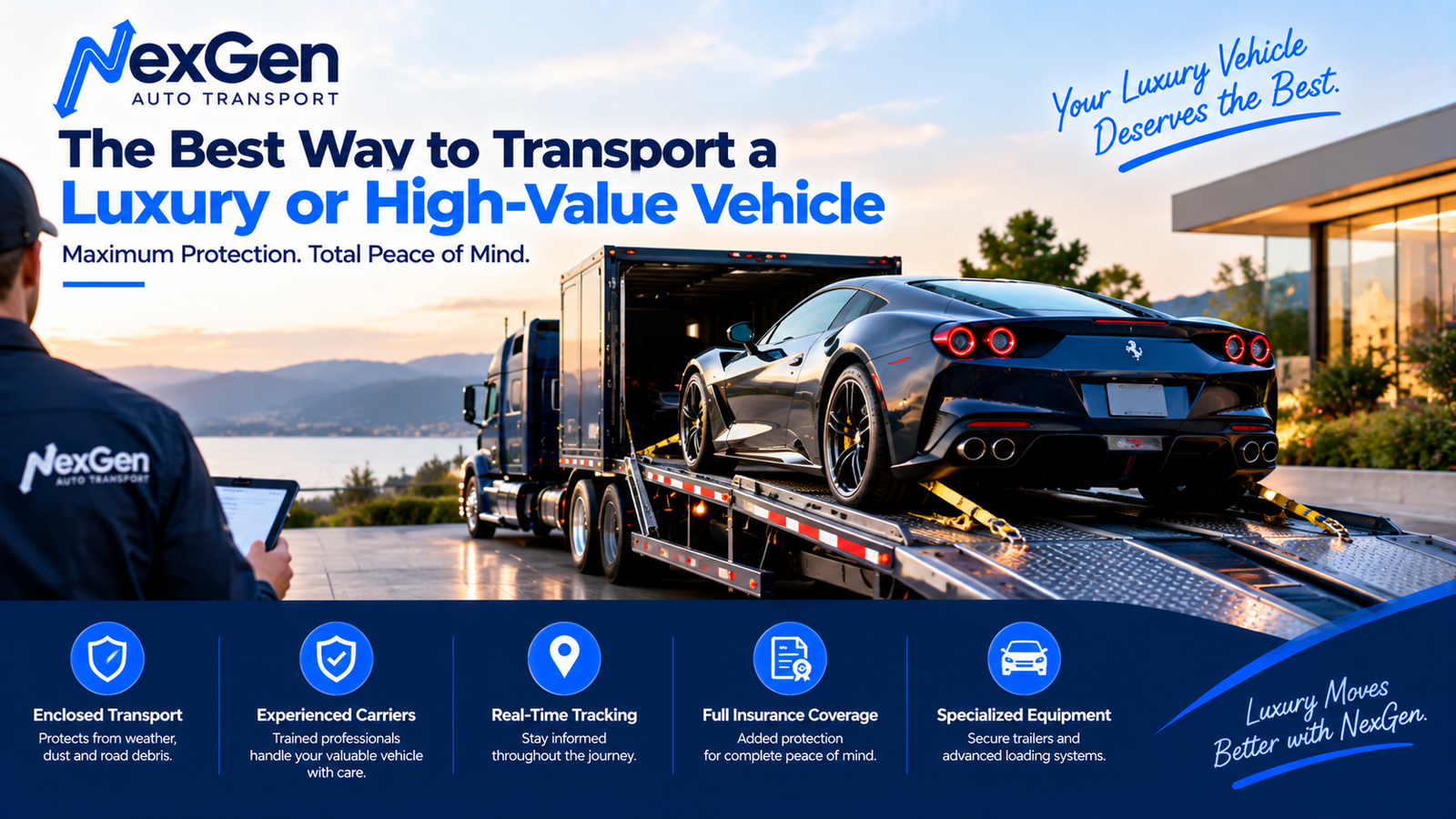
A luxury sedan, a classic restoration, or a six-figure exotic isn’t a car you hand off to just any carrier. Luxury car transport calls for more than the standard process — the right trailer, the right insurance coverage, and a carrier that treats your vehicle like the asset it is. Here’s exactly what that looks like.
Do you want to ship your car?
Call Now: + (832) 886-1321Should Luxury Cars Use Enclosed Transport?
In most cases, yes. Enclosed transport shields a vehicle from weather, road debris, and the general exposure that comes with an open trailer, which matters more for a vehicle where even minor cosmetic damage is expensive to repair or affects resale value. It’s not a strict requirement — plenty of newer luxury vehicles ship safely via open transport, since it’s the same method dealerships use to move new inventory nationwide. The decision usually comes down to the vehicle’s value, rarity, and how much the owner wants to eliminate even small risks. For a full breakdown of the two methods, see our guide on open vs. enclosed auto transport.Is Enclosed Transport Safer?
Yes, in the specific ways that matter most for high-value vehicles. Enclosed trailers protect against:- Weather exposure — rain, hail, snow, and road salt, which can affect paint and undercarriage components over a long route
- Road debris — rocks, dust, and small road hazards kicked up by other vehicles, which pose a real risk on an open trailer
- Handling — enclosed carriers typically carry fewer vehicles per trip and are often more experienced with low-clearance and specialty loading, reducing the risk of scraping or improper securing
How Is a High-Value Vehicle Protected During Transport?
Beyond the choice between open and enclosed, several practices are specific to shipping luxury, exotic, and classic vehicles:- Soft tie-downs instead of standard wheel straps, which reduce the risk of marking wheels or suspension components on vehicles with aftermarket or delicate wheels
- Hydraulic lift gates rather than standard ramps, critical for low-clearance sports cars that could scrape on a conventional loading ramp
- Climate-controlled or insulated trailers, offered by some specialized carriers for vehicles that shouldn’t be exposed to extreme temperature swings
- Single or limited-vehicle trailers, reducing the handling and movement a vehicle experiences compared to a full multi-car open trailer
- Experienced, specialty-trained drivers, who handle low-clearance and high-value vehicles as a regular part of their work rather than an occasional exception
Do you want to ship your car?
Call Now: + (832) 886-1321What Insurance Should I Check Before Shipping a Luxury Vehicle?
Insurance is the single most important thing to verify before booking, since a standard cargo policy may not be sufficient for a vehicle worth well above average. Confirm the following in writing before you book:- Total coverage limit. Ask specifically whether the carrier’s policy covers your vehicle’s full appraised or market value, not just a standard per-vehicle amount.
- Whether coverage differs for enclosed vs. open transport. Enclosed carriers often carry higher default limits, but this isn’t universal — confirm the specific number.
- What’s excluded. Some policies exclude pre-existing damage, mechanical issues, or certain types of loss — understand the exclusions before you need them.
- Whether supplemental coverage is available or necessary. For a vehicle well above the carrier’s standard coverage limit, ask about additional or gap coverage, either through the carrier or your own insurer.
- Documentation requirements for a claim. Understand what’s needed to file a claim before you’re in a position where you actually need to.
Preparing a Luxury or Classic Vehicle for Shipment
A little extra preparation protects both the vehicle and your position if any dispute comes up later:- Get a professional detail or thorough wash before pickup, so the vehicle’s true condition is clearly visible for inspection.
- Take extensive, well-lit photos from every angle, including close-ups of any existing wear, modifications, or unique features.
- Document mileage and any mechanical notes, especially for a classic vehicle with known quirks a driver should be aware of.
- Remove or secure aftermarket parts — spoilers, mirrors, or other components that could be vulnerable during loading and securing.
- Disable any aftermarket alarm systems to prevent false alerts during transit.
- Leave detailed handling notes for the driver — a low front splitter, an unusual ignition sequence, or anything else that isn’t obvious at a glance.
- Consider a third-party pre-shipment inspection for an especially high-value or rare vehicle, creating an independent condition record beyond the carrier’s own report.
Common Vehicles That Call for Extra Care in Transit
- Exotic and supercars — low ground clearance often requires hydraulic lift gates rather than standard ramps
- Classic and vintage vehicles — older components, unusual fluid or electrical needs, and irreplaceable original parts make careful handling especially important
- Modified or custom builds — aftermarket wheels, wide-body kits, or unique suspension setups need drivers familiar with non-standard securing points
- Limited-production luxury models — rarity alone can justify enclosed transport, independent of the vehicle’s daily-driver condition
- Show cars and competition vehicles — often shipped with specific handling instructions beyond a standard transport order, including precise loading order or positioning requests
Door-to-Door vs. Terminal Delivery for High-Value Vehicles
Door-to-door delivery is generally the preferred choice for luxury and high-value vehicles, since it minimizes the number of times the vehicle changes hands or sits at an intermediate location. Terminal-to-terminal shipping introduces an extra storage and handling step that most owners of a high-value vehicle prefer to avoid, even though it can be marginally less expensive. See our guide on how door-to-door car shipping works for what to expect during pickup and delivery.Timing Considerations for Luxury and Classic Vehicle Shipments
Enclosed and specialty carriers are less common than standard open carriers, which affects scheduling in a few ways:- Longer lead time to book. Fewer available carriers means booking further in advance — often 1–3 weeks — improves your options and pricing.
- Seasonal demand spikes. Classic car shows, auctions, and collector events create temporary surges in demand for enclosed transport around those dates.
- Weather-sensitive routing. Some carriers adjust routes or timing to avoid severe weather when transporting a particularly valuable or delicate vehicle, which can add a day or two versus the most direct route.
Choosing a Carrier for High-Value Vehicles
Not every auto transport provider has genuine experience with luxury, exotic, or classic vehicles. A few things worth confirming before you book:- Direct experience with your vehicle type. Ask specifically about experience with similar makes, models, or classic vehicles, not just general shipping volume.
- Equipment specifics. Confirm whether the carrier uses soft tie-downs, hydraulic lift gates, or other specialty equipment relevant to your vehicle.
- References or reviews specific to high-value shipments, not just general shipping reviews.
- Clear communication about timing. Enclosed and specialty carriers are less common than standard open transport, so realistic scheduling expectations matter.
- Verified licensing and insurance, confirmed in writing, specific to your vehicle’s value.
Open Transport for Luxury Vehicles: When It’s Actually Fine
Not every luxury vehicle needs enclosed transport. Open transport is a reasonable choice when:- The vehicle is a newer luxury model without unusual rarity or collectibility
- The route travels through mild weather with low risk of severe conditions
- Cost is a meaningful factor, and the owner is comfortable with the standard, well-proven open transport process
- The vehicle isn’t a modified, low-clearance, or otherwise delicate build
