
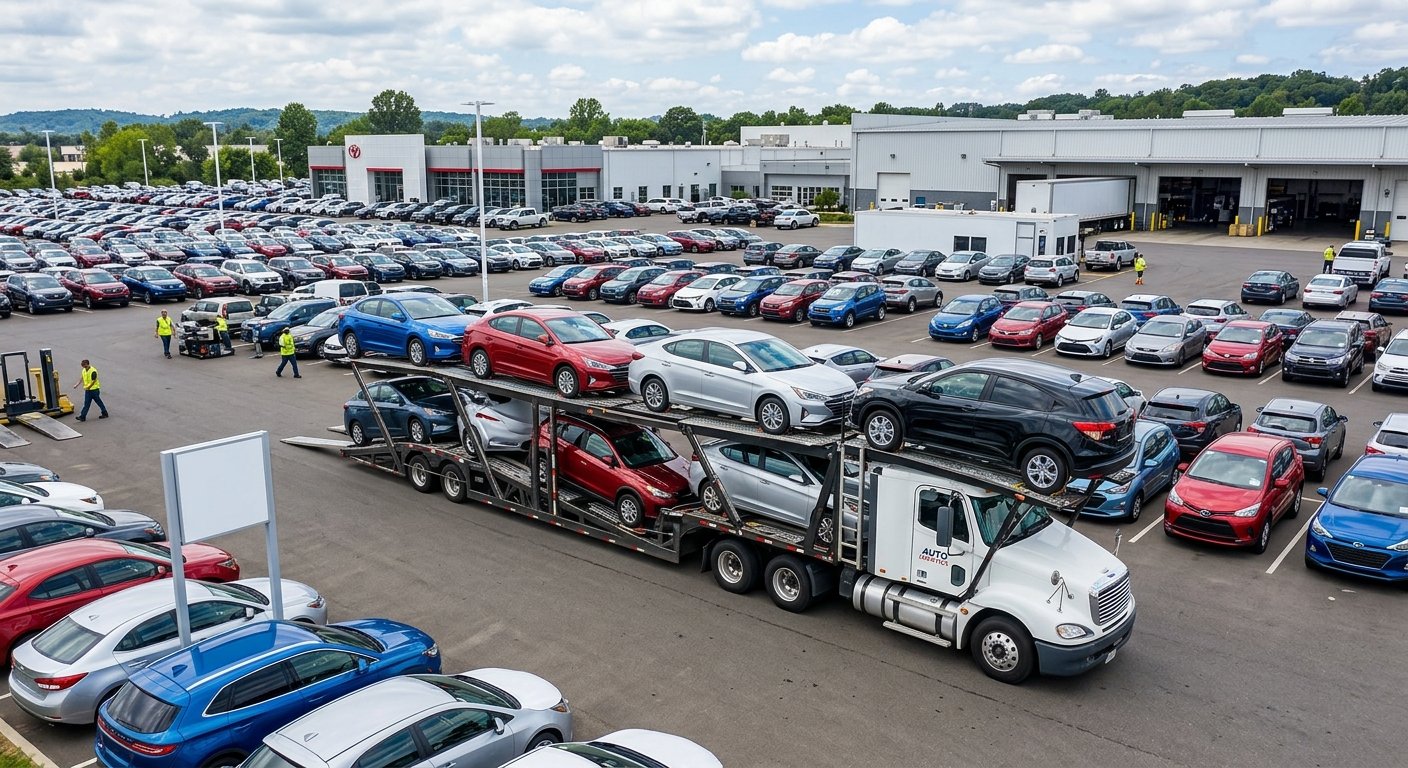
Moving inventory shouldn’t cut into your margins. Whether you’re relocating vehicles from an auction, repositioning stock between lots, or fulfilling an out-of-state sale, dealer auto transport discounts on multi-car shipments help you move more vehicles for less — without sacrificing reliability or turnaround time.
NexGen Auto Transport works with dealerships, wholesalers, and auction buyers to build volume-based pricing that scales with your business. Here’s how our dealer discounts work, what drives the savings, and how to set up an account.
Why Multi-Car Shipping Costs Less Per Vehicle
Auto transport pricing is driven largely by how efficiently a carrier can fill a trailer. A truck running with 8–10 vehicles spreads its fuel, labor, and routing costs across every car on board — which means the marginal cost of adding one more vehicle to an existing shipment is almost always lower than booking it separately.
For dealerships, this translates directly into savings any time you can consolidate:
- Auction pickups — grouping vehicles won at the same or nearby auctions into one shipment
- Lot repositioning — moving inventory between dealership locations in the same network
- Dealer-to-dealer transfers — fulfilling trades or wholesale purchases from other dealers
- Bulk out-of-state deliveries — shipping several online or out-of-state sales together instead of one at a time
How Our Dealer Discount Pricing Works
Rather than charging a flat per-vehicle rate regardless of volume, we structure dealer pricing around how many vehicles move together and how consistently you ship with us:
| Shipment Size | Typical Savings vs. Single-Vehicle Rate |
|---|---|
| 2 vehicles | 5–10% off per vehicle |
| 3–5 vehicles | 10–20% off per vehicle |
| 6+ vehicles / full trailer | 20%+ off per vehicle, custom quote |
Actual savings depend on route, vehicle mix, and how the shipment fits into existing carrier routes — but as a general rule, the more vehicles you consolidate into a single order, the lower your per-vehicle rate. On top of volume pricing, dealers who ship regularly can set up a dedicated account for ongoing discounted rates rather than requesting a new quote every time.
What Sets Dealer Auto Transport Apart From Standard Shipping
Volume-Based Pricing
Standard consumer quotes are priced per shipment. Dealer accounts are priced on volume, meaning your rate improves as your shipping activity grows — whether that’s per order or across a monthly/quarterly average.
Dedicated Account Support
Instead of submitting a new request for every shipment, dealer accounts get a direct point of contact who understands your typical routes, timelines, and preferences — cutting down the back-and-forth on repeat business.
Flexible Trailer Options
Most dealer shipments move via open transport, the most cost-effective option for everyday inventory. For higher-value vehicles — classics, exotics, or low-clearance sports cars — enclosed transport is available on the same order, so mixed-inventory shipments don’t need to be split into separate bookings.
Auction and Wholesale Route Familiarity
We regularly run routes to and from major auction hubs and wholesale marketplaces, which means better scheduling reliability and fewer surprises when you’re working against a resale or delivery deadline.
Consolidated Billing
Dealer accounts can consolidate invoicing across multiple shipments instead of processing payment separately for every vehicle, simplifying your accounting on high-volume months.
Who Uses Dealer Multi-Car Shipping?
- Independent used car dealers sourcing inventory from out-of-state auctions
- Franchise dealerships repositioning vehicles between locations in the same network
- Wholesalers and auction buyers moving purchased lots to their next destination
- Fleet and rental companies relocating vehicles between regional hubs
- Online-first dealers fulfilling multiple out-of-state customer deliveries at once
How to Set Up a Dealer Account
- Request a dealer quote. Tell us your typical shipping volume, common routes, and vehicle types.
- Get a volume pricing structure. We’ll put together tiered rates based on your expected shipment sizes.
- Assign a dedicated contact. Your account gets a direct point of contact for booking and scheduling.
- Book shipments as needed. Submit single vehicles or full multi-car loads under the same account and pricing structure.
- Consolidate billing. Choose per-shipment or batched invoicing, whichever fits your accounting workflow.
Tips to Maximize Your Dealer Shipping Savings
- Batch your bookings. Wherever possible, group vehicles heading to the same region into one order rather than booking them individually.
- Give flexible pickup windows. A 3–5 day window makes it easier for carriers to slot your shipment into an existing route at a better rate.
- Ship consistently with one provider. Volume discounts compound over time — a dealer shipping regularly with the same provider typically gets better standing rates than one who shops around for every load.
- Separate high-value vehicles for enclosed transport. Don’t pay the enclosed premium across a whole shipment when only one or two vehicles need it — mixed orders can split by trailer type.
- Plan around auction and inventory cycles. If you know your typical volume ahead of time, sharing that with your account contact helps us plan capacity and pricing in advance.
Real Numbers: Single-Vehicle vs. Multi-Vehicle Shipping Costs
To put the savings in concrete terms, here’s a simplified comparison of what shipping vehicles individually versus consolidating them into one order might look like for a dealership moving inventory roughly 800 miles:
| Shipment Approach | Vehicles | Estimated Cost Per Vehicle | Estimated Total |
|---|---|---|---|
| Booked individually | 5 | ~$950 | ~$4,750 |
| Consolidated dealer order | 5 | ~$760–$855 | ~$3,800–$4,275 |
These figures are illustrative and will vary by route, vehicle type, and season, but the pattern holds consistently: booking vehicles together, on the same order and ideally the same trailer, is almost always cheaper per unit than booking them one at a time — even when the pickup or delivery locations differ slightly within the same region.
Handling Mixed-Location Pickups and Deliveries
Dealer inventory rarely comes from a single point. You might be pulling vehicles from three different auction lots in the same metro area, or delivering to multiple buyers spread across a state. Multi-car shipping discounts still apply in these cases — carriers can often route through several nearby pickup or drop-off points on the same run, as long as the stops are reasonably close together.
When requesting a quote, it helps to provide:
- A list of pickup addresses (or auction/lot names) and how far apart they are
- Delivery addresses, grouped by region if possible
- Vehicle details for each unit (year, make, model, and whether it’s operable)
- Your target pickup and delivery window
This lets your account contact build the most efficient route and give you an accurate volume-based quote rather than a rough estimate.
Insurance and Compliance for Dealer Shipments
Moving inventory in volume means more exposure if something goes wrong, so it’s worth understanding how coverage works for multi-vehicle dealer shipments:
- Cargo insurance covers the shipment, not just an individual vehicle — confirm the total coverage limit is sufficient for the full value of a multi-car load, not just a single unit.
- Documentation matters at scale. With more vehicles in motion, having a consistent condition-report process (photos, notes, bill of lading) for every unit protects you if a dispute comes up on any one vehicle.
- Carrier registration should be verified for any provider handling your inventory — ask for USDOT and MC numbers as part of setting up your account, same as you would for a single shipment.
- Title and paperwork handling should be clarified upfront, especially for auction purchases where titles may be processed separately from the physical vehicle.
Common Mistakes Dealers Make With Multi-Car Shipping
- Booking vehicles separately out of habit. Even a small time savings from booking quickly one at a time often costs more than batching a few orders together.
- Not communicating total volume upfront. Mentioning your typical monthly or quarterly shipping volume when setting up an account can unlock better standing rates than negotiating shipment-by-shipment.
- Treating every vehicle as open transport by default. High-value units bought at auction are sometimes shipped open out of habit, when splitting a mixed order to route valuable vehicles enclosed can be worth the modest added cost.
- Skipping condition documentation on “routine” shipments. The busier your shipping volume, the more a missed inspection photo can cost you if a damage dispute comes up later.
- Not asking about consolidated billing. Processing payment separately for every vehicle adds unnecessary administrative overhead that a batched invoice avoids.
Why Dealerships Choose NexGen Auto Transport
Beyond volume pricing, dealer accounts get a few things that matter most when transportation is a recurring part of your business rather than a one-off need:
- Consistency. The same account contact and pricing structure across every shipment, instead of re-negotiating each time.
- Reliability on tight timelines. Familiarity with auction and wholesale routes means fewer scheduling surprises when you’re working against a resale deadline.
- Flexibility. Mixed open/enclosed orders, staggered pickup dates, and multi-stop routes are all handled within a single account rather than as separate bookings.
- Scalability. Whether you’re shipping two vehicles a month or twenty, your pricing structure grows with your volume instead of resetting each time.
Auction and Wholesale Route Coverage
Dealer shipping works best when your carrier already understands the logistics around the auction and wholesale hubs you source from. We regularly run routes connecting major regional auto auctions, wholesale marketplaces, and dealer networks across the country, which means less lead time is needed to arrange pickup and fewer scheduling gaps around peak auction days. If your sourcing pattern is concentrated around a specific set of auction locations, let your account contact know — recurring routes are often where the deepest volume pricing shows up, since carriers can build your shipments into an existing, predictable schedule rather than routing a truck out of its way.
Frequently Asked Questions
How much can I save by shipping multiple vehicles at once?
Savings typically start around 5–10% per vehicle for two-vehicle orders and can exceed 20% per vehicle for larger shipments of six or more, depending on route and vehicle mix.
Do I need a certain volume to qualify for a dealer account?
No minimum is required to get started — even occasional multi-vehicle shipments qualify for volume pricing. Dealers who ship regularly can unlock additional standing discounts through a dedicated account.
Can I mix open and enclosed transport in the same order?
Yes. It’s common for dealers to ship most inventory via open transport while sending higher-value vehicles enclosed, all under the same order and account.
How does billing work for dealer accounts?
You can choose per-shipment invoicing or consolidated billing across multiple shipments, whichever is easier for your accounting process.
Can dealer shipping handle auction pickups directly?
Yes. We regularly coordinate pickups directly from major auction and wholesale marketplace locations as part of dealer account service.
Is there a difference in delivery speed for dealer shipments?
Delivery timelines follow the same distance-based guidelines as standard shipments, though consistent dealer accounts often benefit from more predictable scheduling due to established carrier relationships on frequently run routes.
Can I get a quote before setting up a full dealer account?
Yes. You can request a one-off multi-vehicle quote without committing to an ongoing account, though setting up an account is generally the faster path if you expect to ship regularly, since it locks in a standing pricing structure and a dedicated contact.
What information do you need to put together a dealer pricing structure?
Typically your average monthly or quarterly shipment volume, common pickup and delivery regions, typical vehicle types, and whether you anticipate needing enclosed transport for any portion of your inventory. The more detail you can share upfront, the more accurate your volume pricing will be.
Start Saving on Your Dealership’s Auto Transport
Whether you’re moving two vehicles or a full trailer load, NexGen Auto Transport can build a pricing structure around how your dealership actually ships.
Request a dealer quote from NexGen Auto Transport and find out what volume pricing looks like for your typical shipment size and routes.
