
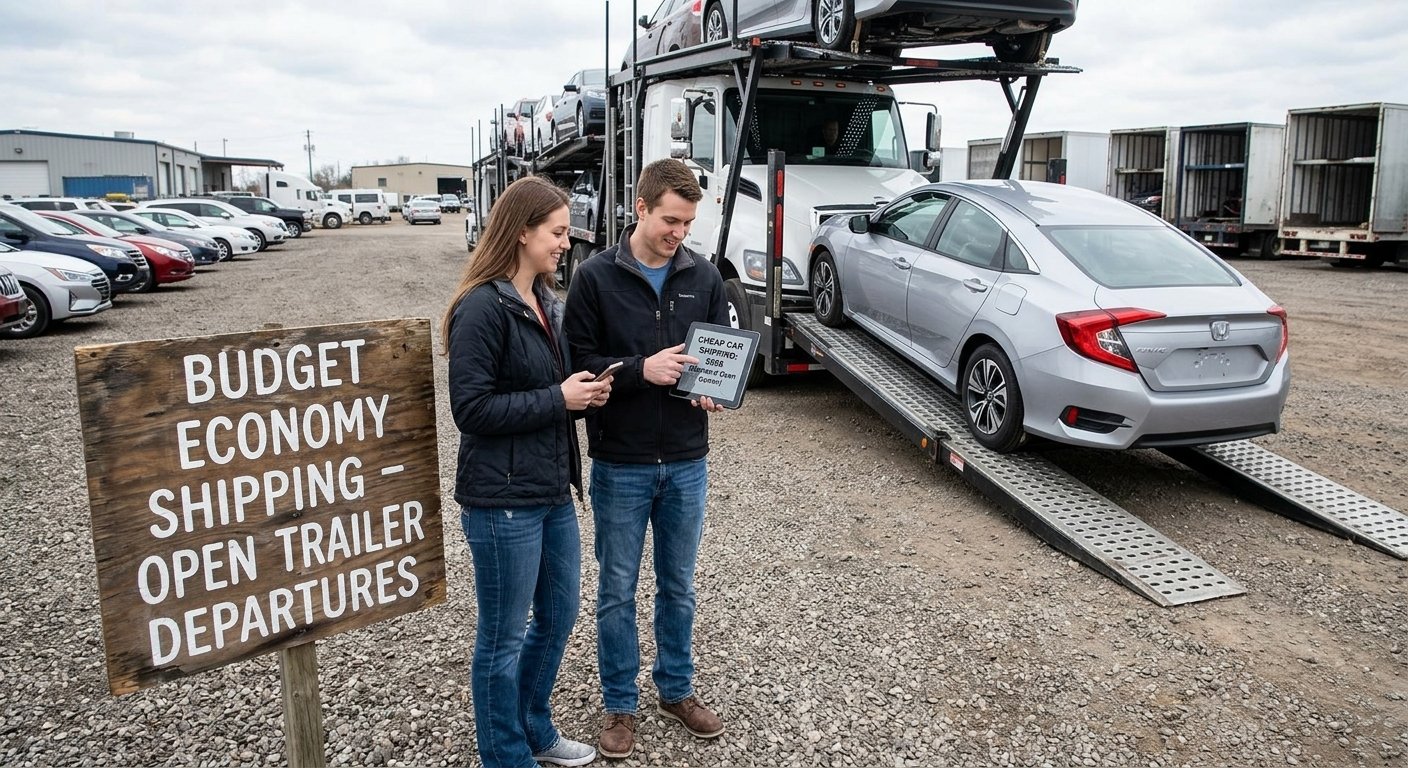
If you’re comparing car shipping quotes, you’ve probably noticed prices can vary by hundreds of dollars for the exact same route. Cheap car shipping isn’t about finding a shady deal — it’s about understanding which choices actually lower the price, and which ones just look like savings until the bill arrives.
Here’s what genuinely brings your quote down, what to watch out for, and how NexGen Auto Transport builds affordable rates into standard service rather than a one-time promo.
The Cheapest Way to Ship a Car, at a Glance
In order of impact, the biggest cost-saving levers are:
- Choose open transport instead of enclosed
- Book in advance rather than last-minute
- Give a flexible pickup window instead of a fixed single day
- Ship in the off-season when demand for carriers is lower
- Ship multiple vehicles together if you have more than one
- Compare quotes instead of booking the first one you see
None of these require sacrificing safety or reliability — they’re really about giving carriers more flexibility to fit your vehicle into an efficient route, which is what actually drives pricing down.
1. Choose Open Transport Over Enclosed
Open transport is the standard, most widely available shipping method and typically costs 30–60% less than enclosed transport for the same route. It’s also what dealerships use to move new vehicles nationwide, so it’s a safe, proven option for the vast majority of vehicles — enclosed transport is really only worth the premium for classic, exotic, or unusually high-value cars. See our full comparison in open vs. enclosed auto transport.
2. Choose Terminal-to-Terminal Over Door-to-Door
Door-to-door shipping — where the carrier picks up and drops off at your exact addresses — is the most convenient option and usually only slightly more expensive. Terminal-to-terminal shipping, where you drop off and pick up at a designated facility, can save a bit more, but it requires you to handle the travel and timing yourself, and may involve storage fees if you can’t pick up right away. For most people, the modest savings don’t outweigh the added hassle, but it’s worth considering if a terminal happens to be conveniently located near both ends of your route.
3. Book in Advance
Last-minute shipments almost always cost more, since carriers have less flexibility to fit your vehicle into an existing route. Booking 1–3 weeks ahead of your target pickup date typically gets you better pricing and more availability than requesting pickup within a day or two.
4. Give a Flexible Pickup Window
A rigid, single-day pickup requirement limits which carriers can take your shipment. Offering a 3–5 day window instead gives carriers much more room to slot your vehicle into an efficient route — often the single easiest way to bring a quote down without changing anything else about your shipment.
5. Ship During the Off-Season
Prices typically rise in late spring and summer, when moving season and seasonal relocations peak demand for carriers. Shipping in fall or winter (outside of routes to snowbird destinations like Florida or Arizona) generally means lower demand and better rates.
6. Ship Multiple Vehicles Together
If you’re shipping more than one vehicle — a household move with two cars, or inventory for a dealership — booking them together is almost always cheaper per vehicle than shipping them separately, since it makes more efficient use of the carrier’s trailer space. NexGen offers a multi-car shipping discount for exactly this reason; see our guide on multi-car shipping discounts for how the savings scale with volume.
7. Compare Multiple Quotes
Prices can vary meaningfully between providers for the same route, since pricing depends heavily on which carrier happens to have availability heading your direction. Getting more than one quote — and being cautious of any quote that seems unusually low, which can signal a broker who hasn’t actually secured a carrier at that price — is one of the simplest ways to avoid overpaying.
Cheapest vs. Fastest vs. Safest: Finding the Right Balance
| Priority | Best Choice | Trade-off |
|---|---|---|
| Lowest cost | Open transport, terminal-to-terminal, flexible dates, off-season | Less convenience, longer booking lead time |
| Fastest delivery | Open transport, expedited/guaranteed pickup | Higher cost for priority scheduling |
| Maximum protection | Enclosed transport, door-to-door | Highest cost, less carrier availability |
Most shippers land somewhere in the middle — open transport with door-to-door convenience covers the large majority of everyday shipments well, without the added cost of enclosed service most vehicles don’t need.
Why NexGen Auto Transport Is a Smart Choice for Affordable Shipping
Cheap shouldn’t mean risky. NexGen Auto Transport is built to keep rates competitive without cutting corners on reliability:
- Flat discount up to 10% for every customer, on open, enclosed, door-to-door, and expedited shipping
- Multi-car shipping discount up to 20% for customers shipping more than one vehicle, including dealers and auction buyers
- Military discount up to 20% for active duty service members, veterans, and military families
- Student discount up to 20% on door-to-door shipping to or from campus
- No upfront fees — you’re not charged until your shipment is allocated to a carrier and dispatched
- Guaranteed pickup, so you’re not left waiting past your scheduled window
- Full insurance coverage included — up to $250K for open transport and up to $500K for enclosed and door-to-door — at no extra cost
- FMCSA-licensed and bonded, with a 4.6-star BBB rating and 4.7-star Google rating
You can see how these discounts combine with distance and vehicle type in our full breakdown of how much it costs to ship a car.
How Vehicle Type and Condition Affect What “Cheap” Looks Like
Even with every cost-saving tip applied, your starting point still depends on what you’re shipping. A few things worth knowing before you compare quotes:
- Smaller, lighter vehicles ship cheaper. A compact sedan will consistently cost less than a full-size truck or SUV on the same route, since larger vehicles take up more trailer space and add weight.
- Operable vehicles are cheaper to ship than non-running ones. A car that doesn’t start requires a winch or forklift to load, which typically adds $150–$300 to the base cost.
- Popular routes tend to be cheaper. Shipping between major metro areas is usually less expensive than routes involving rural or hard-to-reach pickup and delivery points, simply because carriers run popular corridors more frequently.
- Shorter distances cost more per mile, not less overall. A 300-mile shipment will have a higher per-mile rate than a 2,000-mile one, even though the total price is lower — this is normal and reflects fixed costs like loading and initial fuel being spread across fewer miles.
When Paying a Little More Is Worth It
Chasing the absolute lowest price isn’t always the right call. A few situations where it’s worth paying slightly more than the cheapest available option:
- Your vehicle is a classic, exotic, or otherwise high-value car — enclosed transport’s added cost is easy to justify here.
- You have a hard deadline — a closing date, a move-in date, or a sale that depends on the vehicle arriving on time — where expedited or guaranteed pickup removes scheduling risk.
- You’re choosing between a well-reviewed provider and an unusually cheap unknown one — the small price difference is often worth it for reliability and proper insurance coverage.
Common Mistakes That Cost You More
- Booking last-minute and then paying rush pricing. A little advance planning almost always saves more than any single discount.
- Choosing the absolute lowest quote without checking the provider. An unusually cheap quote can mean a broker hasn’t actually lined up a carrier at that price, leading to delays or a renegotiated rate later.
- Paying for enclosed transport you don’t need. Unless your vehicle is a classic, exotic, or otherwise high-value car, open transport is safe, standard, and significantly cheaper.
- Requesting a single fixed pickup day. Even a few days of flexibility can noticeably lower your quote.
- Not asking about available discounts. Military, student, multi-vehicle, and seasonal discounts aren’t always advertised upfront — it’s worth asking directly.
Frequently Asked Questions
What’s the single cheapest way to ship a car?
Combining open transport with a flexible pickup window and advance booking typically produces the lowest price, since it gives carriers the most room to fit your vehicle into an efficient, low-cost route.
Is terminal-to-terminal shipping really cheaper?
It can save a modest amount compared to door-to-door, but you’ll need to handle drop-off and pickup yourself, and possibly deal with storage fees if timing doesn’t line up. For most people, the convenience of door-to-door outweighs the small savings.
Does booking early actually make a noticeable difference?
Yes. Last-minute shipments often carry a premium since carriers have less flexibility to plan an efficient route around your pickup. Booking 1–3 weeks ahead typically results in meaningfully better pricing.
Are online quotes always accurate?
Online estimates give you a useful ballpark, but the final price depends on specifics like vehicle condition, exact pickup/delivery locations, and current carrier availability. A firm quote usually requires providing those full details.
Is the cheapest quote always the best option?
Not necessarily. If a quote is well below others you’ve received for the same route, it’s worth asking why — it may reflect a broker who hasn’t secured a carrier yet, which can lead to delays rather than actual savings.
Do discounts stack, like military and multi-car?
Discount eligibility and stacking can vary by promotion, so it’s best to mention all that apply — military status, student status, or shipping multiple vehicles — when requesting your quote so the best available rate can be applied.
Get a Cheap, Reliable Quote From NexGen
Affordable doesn’t have to mean uncertain. Get a transparent quote with no upfront fees and see which discounts apply to your shipment.
Get a free quote from NexGen Auto Transport and find out how affordable your shipment can be.
