
By NexGen Auto Transport Team · Reviewed by our Operations Team · Updated November 2, 2026
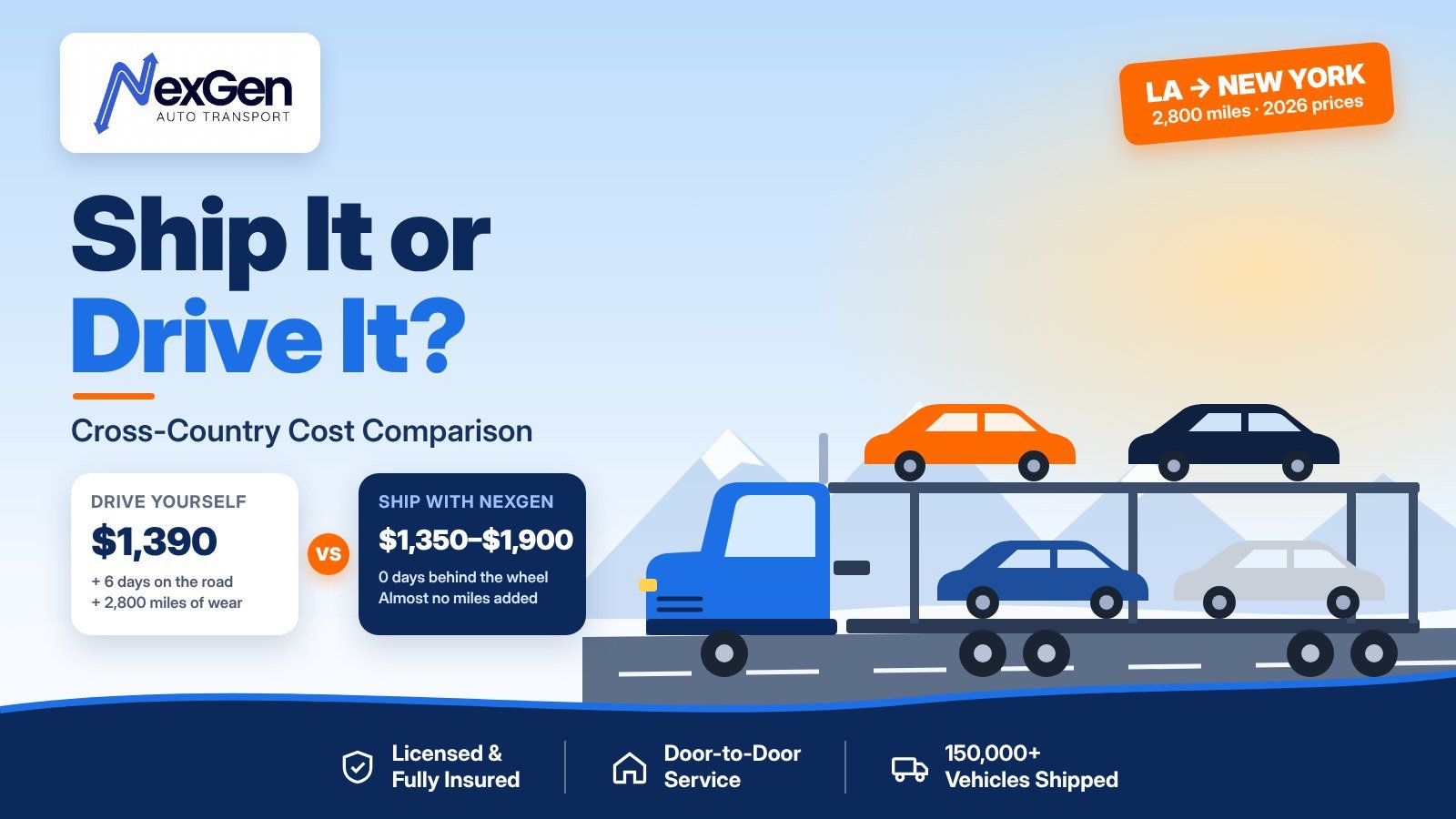
Quick answer: For trips under about 700 miles, driving your car is usually cheaper. For a cross-country move, the costs are closer than most people expect: driving from Los Angeles to New York costs about $1,390 in gas, hotels and meals, while shipping costs about $1,350–$1,900 on an open carrier. Once you add six days on the road and 2,800 miles of wear on your car, shipping usually comes out ahead.
Shipping a car vs driving it yourself is one of the first decisions in any long-distance move. Below, we break down the real 2026 numbers for both options, show the costs most people forget, and explain when each choice makes sense.
What It Really Costs to Drive Cross-Country
To keep the comparison fair, we used current national figures and a typical sedan that gets 28 miles per gallon:
- Gas: $4.17 per gallon, the AAA national average on November 1, 2026.
- Hotels: $113 per night, the federal standard lodging rate for fiscal 2027 set by the General Services Administration.
- Meals: $68 per day, the federal standard meals and incidentals rate.
- Driving pace: about 500 miles a day, which is roughly 8 hours behind the wheel.
- Wear and depreciation: about 61 cents per mile. That is the IRS standard mileage rate of 76 cents (in effect since July 1, 2026) minus the fuel cost per mile.
| Cost item | Drive 1,000 miles | Drive 2,800 miles (LA to New York) |
|---|---|---|
| Gas | $149 | $417 |
| Hotels | $113 (1 night) | $565 (5 nights) |
| Meals | $136 (2 days) | $408 (6 days) |
| Out-of-pocket total | $398 | $1,390 |
| Wear and depreciation | About $610 | About $1,710 |
| Days on the road | 2 | 6 |
The out-of-pocket number is what you pay at the pump, the front desk and the drive-through. The wear line is real too, but you pay it later, in tire replacements, oil changes and a lower resale value.
What It Costs to Ship Your Car Instead
Here is what shipping a standard sedan costs in 2026 with NexGen Auto Transport. These are the same price ranges we use on our state pages.
| Distance | Open carrier | Enclosed carrier | Transit time |
|---|---|---|---|
| About 1,000 miles | $650 – $900 | $900 – $1,350 | 3–5 days |
| About 2,000 miles | $1,050 – $1,450 | $1,450 – $2,200 | 4–7 days |
| About 2,800 miles (coast to coast) | $1,350 – $1,900 | $1,900 – $2,850 | 6–9 days |
If you ship, you will usually fly to your new city, so add the cost of a one-way flight. SUVs, pickups and non-running vehicles cost more. For a route-specific number, see our car shipping cost guide or our coast-to-coast guides for California to New York and New York to California.
Shipping vs Driving: Side-by-Side Comparison
| Factor | Driving yourself | Shipping with a carrier |
|---|---|---|
| Out-of-pocket cost (2,800 miles) | About $1,390 | $1,350 – $1,900 plus a flight |
| Your time | About 6 days of driving | A few hours: a flight plus pickup and delivery |
| Miles added to your car | 2,800 | Almost none |
| Wear and depreciation | About $1,710 | None |
| Risk on the road | Fatigue, weather, breakdowns | Carried on a truck and covered by carrier insurance |
| Best for | Short trips, older cars, road-trip lovers | Long moves, newer or leased cars, families, busy schedules |
The Hidden Costs of Driving
- Time off work. Six days of driving is six days of vacation or unpaid leave. For many people, that alone costs more than shipping.
- Lease mileage limits. Many leases cap you at 10,000–12,000 miles a year. A 2,800-mile drive can use a big share of that and lead to per-mile charges when you turn the car in.
- Breakdowns far from home. A repair in an unfamiliar town, plus an extra hotel night while you wait, can wipe out any savings.
- Winter roads. From November to March, snow and ice in the Rockies, Midwest and Northeast add risk and delays. See our guide to shipping a car in winter.
- Fatigue. Long days behind the wheel are tiring, especially if you are also managing a move, kids or pets.
- Charging stops for EVs. Electric vehicles add charging time on long trips. Learn how to ship an electric vehicle instead.
When Driving Makes More Sense
- Your trip is under about 700 miles and you can do it in one or two days.
- Your car is older, already high-mileage, and extra wear does not matter much.
- You need the car the moment you arrive and cannot wait for delivery.
- You genuinely want a road trip and have the time off to enjoy it.
When Shipping Makes More Sense
- Your move is more than 1,000 miles, especially coast to coast.
- Your car is new, leased, luxury or classic, and you want to keep the miles off it. Compare open vs enclosed transport for valuable cars.
- You have more than one car. You cannot drive two cars at once, and shipping both costs far less than two road trips.
- You are moving with family and would rather fly. See our guide to shipping your car when moving to a new state.
- You cannot take a week off work, or you need to be somewhere else while the car moves. You can even ship a car without being there.
How to Decide in 3 Questions
- How far is it? Under 700 miles, lean toward driving. Over 1,000 miles, lean toward shipping.
- What is your time worth? Multiply your days on the road by what a day off costs you, then add it to the driving total.
- How much do the miles matter? On a new or leased car, 2,800 extra miles affect resale value and lease charges more than on an older car.
How Shipping With NexGen Works
- Get a quote. Tell us your pickup and delivery locations, vehicle and dates. Quotes are free.
- Book with a reservation hold. A card or electronic hold reserves your spot, and the balance is due on delivery. Cancelling is free before a carrier is assigned.
- Pickup. The driver inspects the car with you and records its condition on the bill of lading. Learn how door-to-door car shipping works.
- Delivery. You inspect the car again, sign, and pay the balance. Every shipment is covered by carrier insurance up to $250,000 on open carriers and $500,000 on enclosed carriers. See our insurance details.
NexGen Auto Transport is based in Stafford, Texas, and has shipped more than 150,000 vehicles since 2021. We ship from every major city, including Los Angeles and New York City.
Frequently Asked Questions
Is it cheaper to ship a car or drive it across the country?
On out-of-pocket costs, they are close. Driving 2,800 miles costs about $1,390 in gas, hotels and meals, and shipping costs about $1,350–$1,900 plus a flight. When you add six days of time and about $1,710 in wear and depreciation, shipping is usually the better value.
At what distance does shipping a car make sense?
Shipping usually makes sense for moves of 1,000 miles or more. Under about 700 miles, driving is normally cheaper unless your time, a new car’s mileage or a lease limit matters to you.
How long does it take to ship a car across the country?
Coast-to-coast car shipping takes about 6–9 days in transit. Shorter routes of about 1,000 miles take 3–5 days. See how long car shipping takes for more detail.
Does shipping a car add miles to it?
No. On a standard carrier, your car rides on the trailer, so only a few miles are added for loading and unloading.
Is my car insured while it is being shipped?
Yes. The carrier’s cargo insurance covers your car during transit. With NexGen, coverage is up to $250,000 on open carriers and $500,000 on enclosed carriers. Read what car shipping insurance covers.
Skip the Drive and Ship With NexGen
If a long drive means days off work, extra miles on your car and nights in roadside hotels, shipping is often the smarter move. Get a free quote for your route, or call our team to compare your options.
About the authors
This guide was written and reviewed by the NexGen Auto Transport team in Stafford, Texas. Since 2021 we have arranged transport for more than 150,000 vehicles nationwide (FMCSA MC 1482694, USDOT 3969190). Prices and transit times reflect our current rates. Read our editorial policy.
