
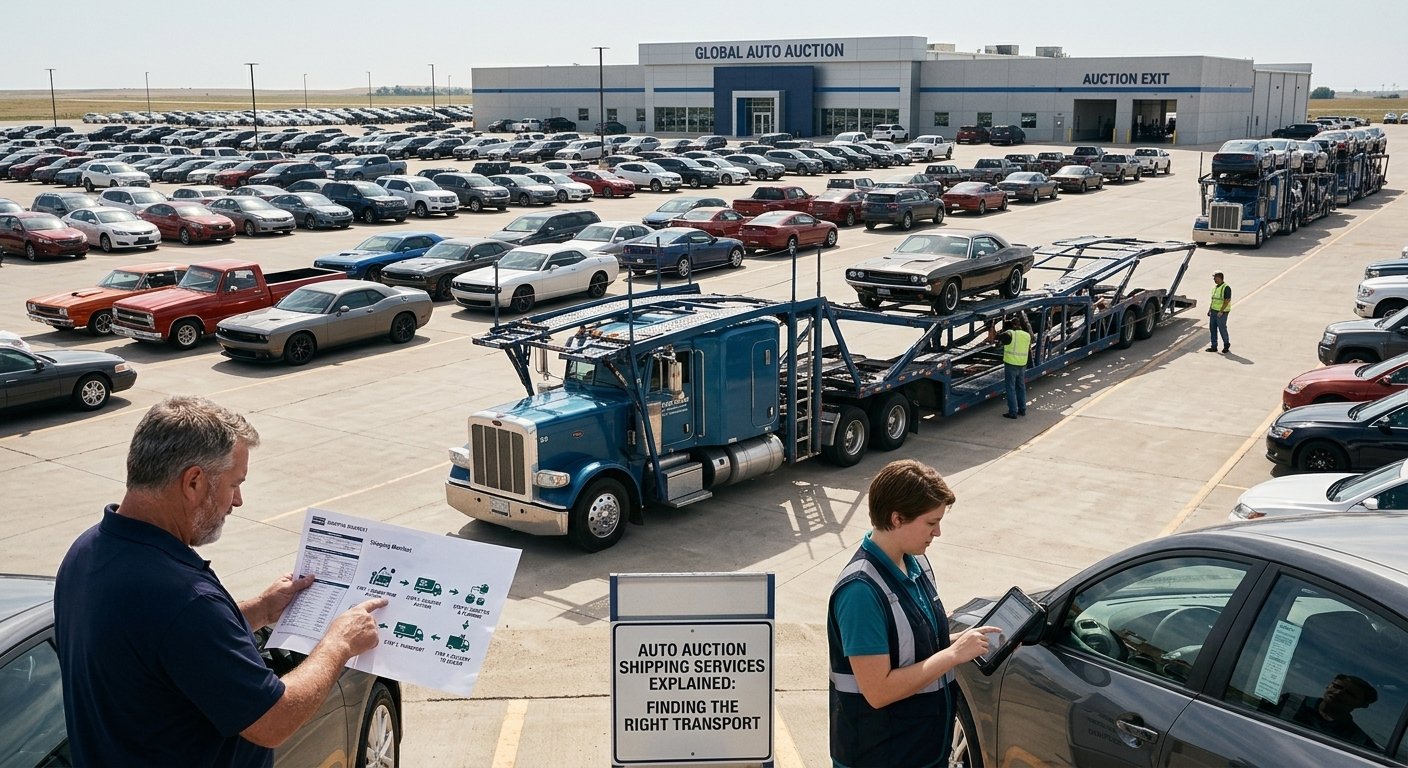
Winning a vehicle at auction is only half the process — getting it off the lot and to your dealership, driveway, or reconditioning center is a separate logistics challenge with its own rules, paperwork, and deadlines. Auto auction vehicle shipping works differently than a standard car shipment, and understanding the process upfront can save you time, storage fees, and headaches.
This guide walks through how auction shipping actually works across the major auction houses, what documentation you’ll need, typical costs and timelines, and how to avoid the most common delays.
How Auto Auction Vehicle Shipping Works
Regardless of which auction house you’re buying from, the process generally follows the same core steps:
- Win the auction and pay in full. Vehicles are not released to a carrier until payment, including buyer’s premium and any applicable fees, has cleared.
- Receive your release documentation. The auction issues a gate pass or release form authorizing a third-party carrier to remove the vehicle on your behalf.
- Book transport promptly. Most auction lots offer a limited number of free storage days — typically 2–5 — before daily storage fees begin accruing.
- Your carrier schedules pickup with the lot. Most auctions require a scheduled appointment; walk-up pickups are often not accepted, and many lots are closed on weekends.
- Delivery to your specified address. Your vehicle is delivered to your dealership, home, reconditioning center, or another destination you choose.
What You’ll Need to Provide When Booking
Auction shipments require more upfront information than a typical vehicle shipment, since your carrier needs to be authorized to remove the vehicle from a secured lot on your behalf. Have the following ready when you request a quote:
- Auction name and lot location (city and state)
- Lot or stock number for the vehicle
- Buyer ID or buyer number
- Gate pass or release form, or authorization for your carrier to coordinate directly with the auction
- Vehicle condition — whether it runs, rolls, steers, and brakes, since this determines what equipment the carrier needs to bring
How Requirements Differ by Auction House
While the overall process is similar across auction platforms, each one has its own specific documentation and pickup procedures:
| Auction House | What’s Typically Required | Notes |
|---|---|---|
| Copart | Buyer number and lot number | Closed weekends; storage fees often begin after ~3 free days |
| IAA (Insurance Auto Auctions) | Buyer number and stock number | Closed weekends; can have longer release wait times during peak periods |
| Manheim | Gate pass (often under the dealership’s name) and last 6 digits of the VIN | Large physical and digital auction network; wholesale-focused |
| ADESA | Gate release and buyer credentials | Similar process to Manheim; primarily wholesale dealer auctions |
| Dealer-only/private auctions | VIN and name of the selling representative | Requirements vary more by individual auction house |
Because requirements vary, it’s worth confirming the exact documentation your specific auction location requires before your pickup window starts — a missing form is one of the most common causes of delay.
How Much Does Auction Vehicle Shipping Cost?
Auction shipments are generally priced similarly to standard car shipping — based on distance, vehicle type, and transport method — with a modest additional cost on many routes to account for the extra coordination involved in scheduling a lot pickup. For a full breakdown of how distance and vehicle type affect pricing, see our guide on how much it costs to ship a car.
A few auction-specific cost factors to keep in mind:
- Storage fees — these accumulate the longer a vehicle sits on the lot after its free storage window ends, so booking transport quickly after payment matters more here than with a standard shipment.
- Gate or release fees — some auction houses charge a fee for processing the release paperwork or assisting with loading.
- Inoperable vehicle fees — salvage and non-running vehicles are common at auction and require winch-equipped carriers, which typically adds to the base cost.
- Multiple vehicles from the same event — if you’re purchasing several vehicles at one auction, consolidating them into a single shipment is usually more cost-effective than booking each separately. See our guide on bulk vehicle transport for dealerships if you’re moving a larger volume from an auction event.
How Long Does It Take to Ship an Auction Vehicle?
Transit time for an auction shipment follows the same general distance-based timeline as any other vehicle shipment — for a full breakdown, see how long car shipping actually takes. The bigger variable with auction vehicles is usually the time between winning the auction and the vehicle actually being available for pickup:
- Payment processing — the vehicle isn’t released until payment clears, which can take anywhere from same-day to a couple of business days depending on the auction house
- Release paperwork — gate passes and release forms need to be issued and provided to your carrier before pickup can be scheduled
- Appointment scheduling — most auction lots require a scheduled pickup window rather than accepting walk-up carriers
Once your carrier is on-site with proper documentation, pickup itself is usually quick — the delay, when it happens, almost always comes from the payment and paperwork steps rather than the transport itself.
Open vs. Enclosed Transport for Auction Vehicles
Most auction purchases — everyday sedans, SUVs, and standard trade-ins — ship efficiently via open vehicle transport, the most cost-effective option and the industry standard for moving inventory. If you’ve won a classic, exotic, or otherwise high-value vehicle at auction, enclosed vehicle transport adds protection from weather and road debris for the trip home. For a full comparison of when each option makes sense, see our guide on open vs. enclosed auto transport.
Shipping Inoperable and Salvage Vehicles From Auction
Non-running vehicles are common at salvage and insurance auctions like Copart and IAA. Shipping one requires a carrier equipped with a winch or forklift to load a vehicle that doesn’t roll, steer, or brake normally. A few things to confirm before booking:
- Whether the vehicle rolls, steers, and brakes — this determines the loading method your carrier needs to use
- Whether the vehicle has any fluid leaks or hazards that need to be addressed before transport
- Any special handling notes from the auction listing (frame damage, flood title, etc.) that could affect how the vehicle is secured on the trailer
Inoperable and salvage vehicles typically cost more to ship than a standard operable vehicle, due to the specialized equipment required to load and unload safely.
Tips to Avoid Delays and Extra Fees
- Book transport as soon as payment clears. Free storage windows are short, and daily storage fees add up quickly once they end.
- Have your release paperwork ready before contacting your carrier. A missing gate pass or release form is one of the most common causes of a delayed pickup.
- Double-check auction hours. Many auction lots, including Copart and IAA, are closed on weekends, which affects how quickly a carrier can schedule pickup.
- Consolidate multiple purchases from the same event. If you’ve won more than one vehicle at the same auction, booking them together is usually more cost-effective than separate shipments.
- Confirm condition details upfront. Accurately reporting whether a vehicle is operable avoids a wasted trip if your carrier arrives with the wrong equipment.
Frequently Asked Questions
Can auto transport companies pick up directly from an auction lot?
Yes. Auction houses regularly work with third-party carriers, as long as the carrier has proper authorization — typically a gate pass or release form issued after payment clears.
What happens if I don’t book transport quickly after winning an auction?
Most auction lots offer only a few free storage days before charging daily fees. The longer a vehicle sits unclaimed, the more those fees add up, so it’s best to book transport as soon as payment is confirmed.
Do all auctions require the same paperwork for release?
No. Requirements vary by auction house — Copart and IAA typically require a buyer number and lot/stock number, while Manheim and similar wholesale auctions often require a gate pass and partial VIN. Always confirm the specific requirement for your auction location.
Can I ship a non-running vehicle from a salvage auction?
Yes. Inoperable and salvage vehicles are common at auctions like Copart and IAA, and carriers equipped with winches or forklifts can load them safely. This typically adds to the base shipping cost.
Is auction vehicle shipping more expensive than standard car shipping?
It can be slightly higher on some routes due to the added coordination of scheduling a lot pickup, plus any applicable gate or storage fees — but the core pricing still follows the same distance and vehicle-type factors as standard shipping.
Can I ship multiple vehicles from the same auction event together?
Yes, and it’s usually more cost-effective than booking each vehicle separately. This is especially common for dealers and wholesale buyers purchasing several vehicles at once.
Get a Quote for Your Auction Vehicle
Whether you’re picking up a single vehicle or consolidating several purchases from the same auction event, NexGen Auto Transport coordinates pickup directly with major auction houses nationwide.
Get a free quote from NexGen Auto Transport, or contact our team to coordinate pickup from your auction location.
