
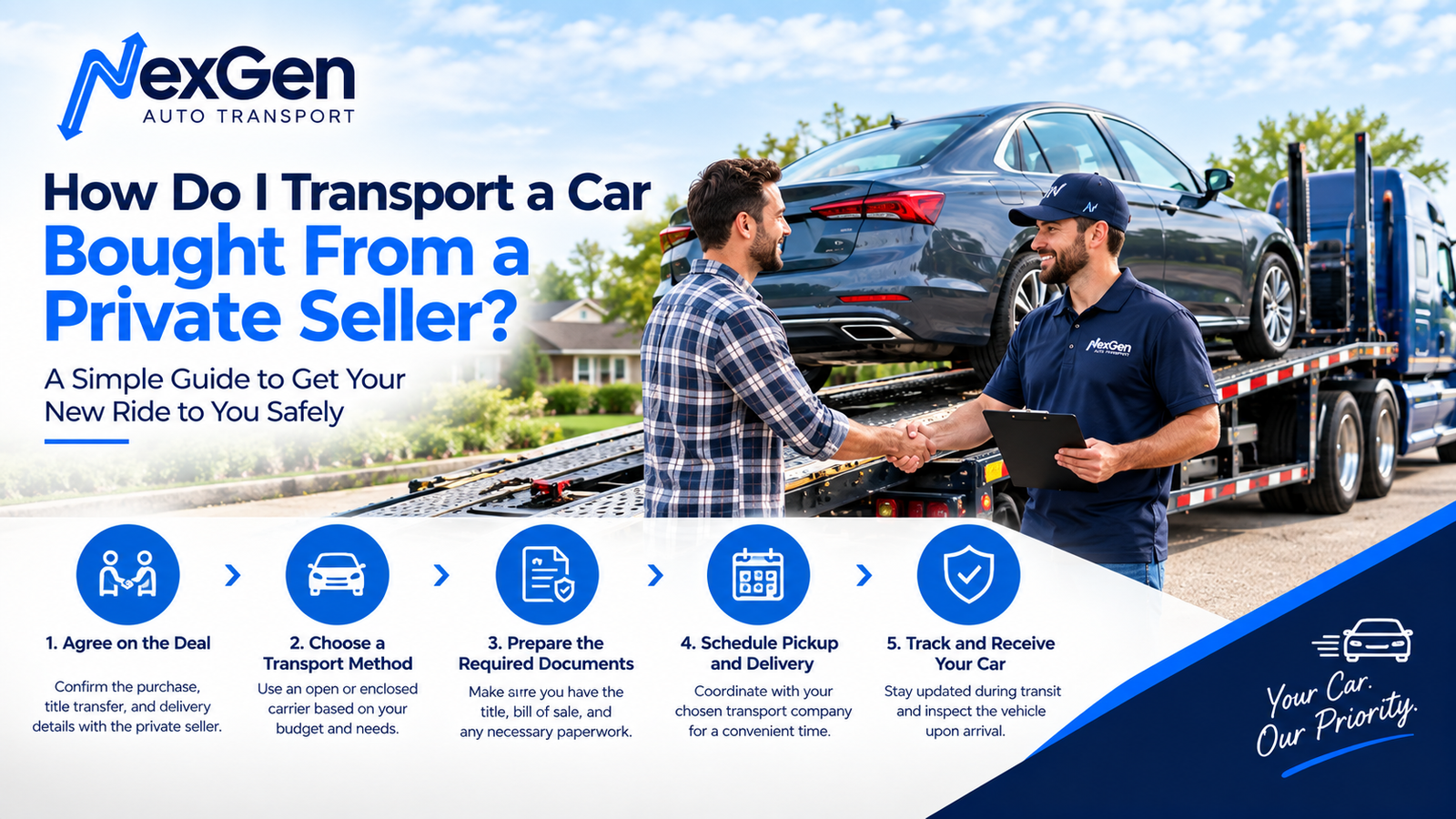
You found the car on a listing site. You agreed on a price with a stranger. Now you need to get it home, and there’s no dealership to help coordinate pickup. Shipping a car bought from a private seller works a little differently than shipping from a dealer. Here’s exactly how to do it right.
Do you want to ship your car?
Call Now: + (832) 886-1321Why Private-Party Shipping Is Different
A dealership ships cars every day. A private seller usually doesn’t. That changes a few things:- You guide the process. The seller may need help understanding how pickup works.
- You confirm the sale is complete before booking. Title and payment need to change hands first.
- You verify the seller’s address and availability. There’s no dealership lot with regular hours.
- You handle more of the paperwork yourself. No sales team is doing it for you.
Step-by-Step: Shipping a Car From a Private Seller
- Finalize the sale first. Complete payment and sign the title before you book transport.
- Get the seller’s exact address. Confirm it’s where the carrier can actually access the vehicle.
- Request a shipping quote. Provide the pickup address, your delivery address, and the vehicle’s year, make, and model.
- Share the carrier’s contact with the seller. This lets them coordinate pickup timing directly.
- Confirm the seller will be present at pickup. Someone needs to hand over the keys and complete the inspection.
- Track the shipment to delivery. Most carriers provide updates as your vehicle moves toward you.
- Inspect the car at delivery. Compare it to the pickup condition report before you sign off.
Protecting Yourself Before You Buy
A private sale carries more risk than a dealership purchase. A few steps lower that risk significantly:- Verify the seller’s identity and confirm the name on the title matches the person selling the car.
- Ask for the vehicle’s VIN and run a vehicle history report before you commit to the purchase.
- Request recent photos or a video walkaround if you can’t inspect the car in person.
- Consider a third-party inspection for a higher-value vehicle you haven’t seen firsthand.
- Use a secure payment method. Avoid wiring money to someone you’ve never met without any verification.
- Get the bill of sale in writing. This protects both you and the seller if a dispute comes up later.
Do you want to ship your car?
Call Now: + (832) 886-1321Meeting a Private Seller for Pickup: Safety Basics
Most private-party transactions go smoothly. A few basic precautions keep it that way:- Meet or communicate in a verifiable way first. A phone call before pickup day confirms the seller is real and the details match.
- Share your carrier’s driver details with the seller in advance. This helps the seller know who to expect at their door.
- Ask the seller to have the title and any spare keys ready. This speeds up the handoff and avoids a delay at pickup.
- Keep a copy of all communication with the seller. Texts, emails, and the bill of sale all help if a question comes up later.
Documents to Have Ready Before Pickup
Gathering the right paperwork ahead of time keeps pickup day simple. Have these ready:- The signed title, transferred from the seller to you
- A completed bill of sale, signed by both parties
- Proof of insurance for the vehicle, if your state requires it before the car can legally travel
- Any maintenance records the seller provided, useful for your own reference once the car arrives
- Your carrier’s booking confirmation, including the pickup window and contact information
Open vs. Enclosed Transport for a Private Purchase
Most private-party vehicles ship well on open transport, the standard and most affordable option. If you bought a classic, exotic, or otherwise high-value vehicle from a private seller, enclosed transport adds protection from weather and road debris during the trip. See our full comparison in open vs. enclosed auto transport to decide which fits your purchase.Buying Sight-Unseen From a Private Seller
Some buyers purchase a car from a private seller without ever seeing it in person, especially for out-of-state deals. This raises the stakes on verification. A few extra steps help:- Request a live video call so you can see the car and ask the seller questions in real time.
- Hire a local independent inspector near the seller to check the vehicle before you commit to buying.
- Compare the seller’s photos against the vehicle history report for any inconsistencies in mileage or reported damage.
- Confirm the exact pickup address matches where the vehicle is actually located, not just the seller’s mailing address.
What the Seller Needs to Know
Most private sellers haven’t shipped a car before. A quick heads-up saves confusion on pickup day. Let them know:- A large trailer will need reasonable access to the property, or a nearby meeting spot if the street is too narrow
- They’ll need to be present, or arrange for someone else to hand off the vehicle
- The driver will walk around the car and note its condition before loading it
- Pickup timing may shift by a few hours depending on the carrier’s other stops that day
Door-to-Door Pickup From a Private Address
Door-to-door shipping works well for private-party purchases, since it skips the need for a terminal drop-off that neither you nor the seller may be near. The carrier picks up directly from the seller’s address and delivers straight to yours. See our full guide on how door-to-door car shipping works for what to expect during pickup and delivery.How Much Does It Cost to Ship a Car From a Private Seller?
Pricing follows the same factors as any car shipment: distance, vehicle size, and transport method. See our full breakdown in how much it costs to ship a car. A private-party purchase doesn’t usually add extra cost on its own, but a few things can affect your quote:- A hard-to-access address may require a nearby meeting point instead of a direct driveway pickup.
- A non-running vehicle needs a winch-equipped carrier, which typically adds $150–$300.
- Buying long-distance or cross-country raises the total cost but lowers your per-mile rate. Our guide on cross-country car shipping covers what to expect on longer routes.
How Long Will It Take?
Transit time follows the standard distance-based timeline used across the industry. See how long car shipping actually takes for the full breakdown. As a quick reference:- Under 500 miles: 1–3 days
- 500–1,500 miles: 3–7 days
- 1,500+ miles: 7–10 days
What to Do If the Seller Can’t Be There for Pickup
Life happens. Sometimes the seller can’t make the scheduled pickup time. A few options handle this:- Ask the seller to designate a trusted representative to hand off the vehicle instead
- Reschedule pickup to a time that works for everyone involved
- Arrange a nearby, accessible meeting point that doesn’t require the seller to be home
Common Mistakes to Avoid
- Booking transport before the title has transferred. Confirm the sale is fully complete first.
- Skipping your own condition documentation. Ask for photos from the seller and compare them to the carrier’s pickup report.
- Not confirming the seller will actually be there. A missed pickup wastes your carrier’s trip and delays delivery.
- Assuming the seller knows how shipping works. A short explanation upfront prevents confusion later.
- Wiring payment before verifying the seller and the vehicle. Take basic precautions before you send money.
- Not asking about the vehicle’s operability. A seller may not think to mention a dead battery or a mechanical issue unless you ask directly.
- Forgetting to arrange insurance before the car ships. Some states require proof of coverage before a vehicle can legally be on the road, even as cargo.
How This Differs From Buying at a Dealership or Auction
A private sale puts more of the process on you. A dealership handles much of the paperwork and logistics itself. An auction has a structured release process with set requirements. A private seller usually has neither. That means:- You verify the seller and the vehicle yourself, rather than relying on a business with a reputation to protect
- You explain the shipping process to the seller, rather than working with staff who do this regularly
- You confirm payment and title transfer directly, without a dealership’s finance department managing it
- You have more flexibility on pickup timing, since you’re not working around a lot’s business hours
