
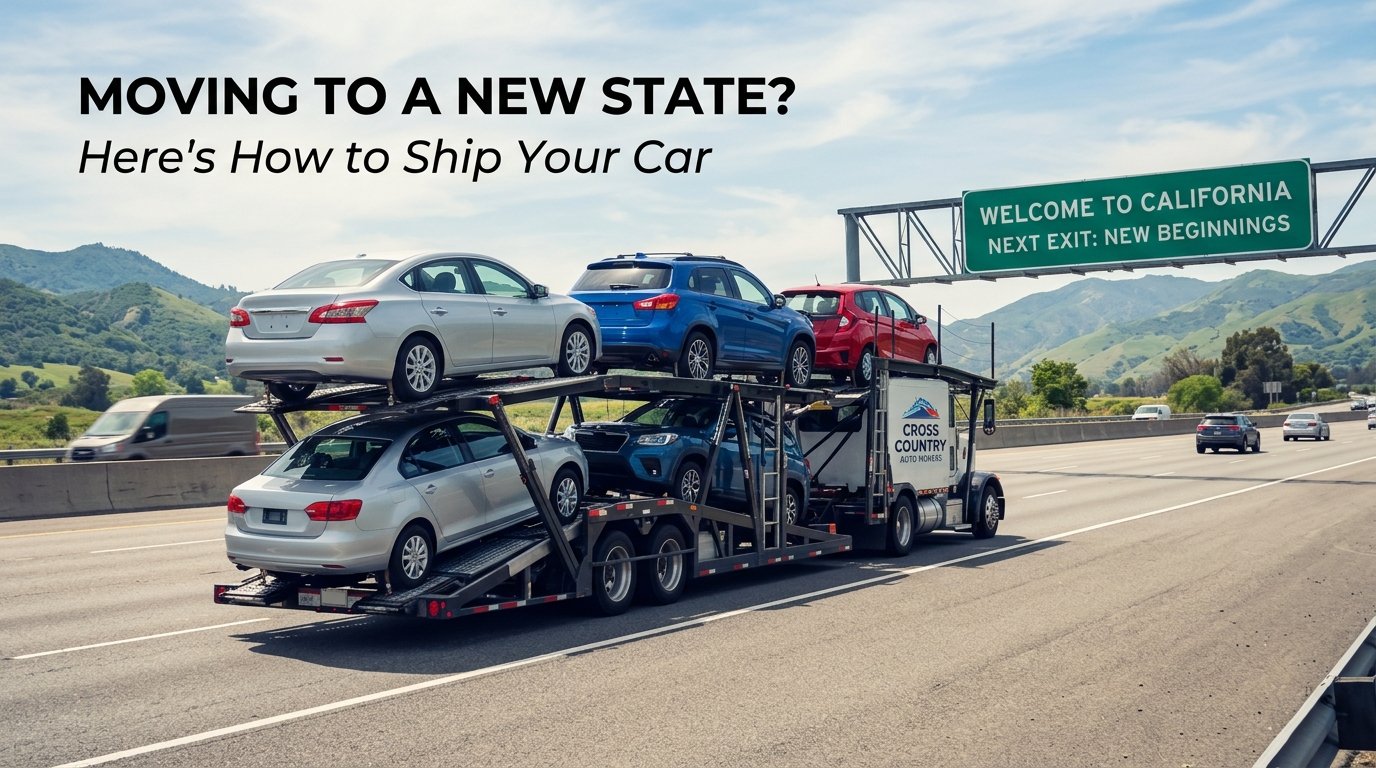
Between packing boxes, transferring utilities, and coordinating movers, figuring out car shipping when moving to a new state can easily fall to the bottom of your to-do list — right up until you realize someone actually has to get your car there.
The good news: shipping your car is usually simpler, safer, and often cheaper in the long run than driving it yourself, especially for long-distance moves. This guide walks through exactly how to fit auto transport into your move — from timing and cost to what to expect on pickup and delivery day.
Should You Ship Your Car or Drive It Yourself?
This is usually the first decision to make, and it comes down to distance, time, and cost.
Driving Makes Sense When:
- Your move is a shorter distance (under a few hundred miles)
- You enjoy road trips and have the vacation time to spare
- You only have one vehicle and no one else to drive it
Shipping Makes Sense When:
- You’re moving a long distance and don’t want to add mileage and wear to your car
- You have multiple vehicles and can’t drive them all yourself
- Your moving timeline is tight and you need to focus on other logistics
- You’d rather fly or drive a moving truck instead of adding hours behind the wheel
Once you factor in gas, lodging, meals, and the extra mileage on your car, shipping is often close in cost to driving yourself — with a lot less hassle. For a full cost breakdown, see our guide on how much it costs to ship a car.
When to Start Planning Your Car Shipment
Auto transport is one of those moving tasks that’s easy to put off — but it shouldn’t be. Here’s a realistic timeline to work from:
| Timeframe Before Move | What to Do |
|---|---|
| 3–4 weeks before | Research auto transport companies and request quotes |
| 2–3 weeks before | Book your carrier and confirm pickup window |
| 1 week before | Prepare your vehicle (clean it, remove belongings, document condition) |
| Pickup day | Complete the pre-shipment inspection and hand off the vehicle |
| Delivery day | Inspect the vehicle again and sign the delivery paperwork |
Booking early matters most during peak moving season (late spring through summer), when demand for carriers is highest and prices tend to run higher. If your move date is flexible, booking in the off-season can save you money and make scheduling easier.
How to Fit Car Shipping Into Your Overall Moving Plan
The biggest mistake people make is treating car shipping as an afterthought instead of coordinating it with the rest of the move. A few things to think through:
Match Your Car’s Delivery to Your Arrival
Talk to your carrier about your move-in date and ask whether they can time delivery to arrive around the same time — or shortly after, if you’ll be driving a moving truck or flying separately. Building in a few days of buffer avoids the stress of arriving before your car does.
Decide Who Will Be There for Pickup and Delivery
Someone needs to be present (you or a trusted representative) at both ends to hand off the keys and complete the inspection. If you’re already on the road in a moving truck on pickup day, arrange for a family member, friend, or your real estate agent to meet the carrier instead.
Plan Around Your Home Sale or Closing Timeline
If you’re shipping a car to a new home you haven’t closed on yet, coordinate delivery to a temporary address — a friend’s house, your new employer, or a storage facility — rather than risking a delivery attempt at a location you can’t access yet.
How Much Does It Cost to Ship a Car During a Move?
Pricing depends primarily on distance, vehicle size, and transport method. As a general guide:
| Shipping Distance | Typical Cost Range |
|---|---|
| Under 500 miles | $540 – $1,100 |
| 500 – 1,500 miles | $700 – $1,800 |
| 1,500+ miles (cross-country) | $1,050 – $3,000+ |
Most household moves use open transport, which is the more affordable and widely available option — the same method used by dealerships to move new vehicles nationwide. If you’re shipping a classic, luxury, or low-clearance vehicle alongside your daily driver, it may be worth comparing options in our open vs. enclosed transport guide.
How Long Will It Take to Get Your Car?
Transit time depends on distance, with carriers typically covering 400–500 miles per day:
- Under 500 miles: 1–3 days
- 500–1,500 miles: 3–7 days
- 1,500+ miles (cross-country): 7–10 days
This is transit time only — add a few days for the carrier to be dispatched to your pickup location after booking. For a full breakdown of what affects timing, see how long car shipping actually takes.
Preparing Your Car for a Move-Related Shipment
Since you’re likely juggling other moving tasks at the same time, it helps to knock out car prep early rather than the night before pickup:
- Wash your car so any existing dents or scratches are easy to document.
- Take dated photos from all angles, including the odometer.
- Remove all personal belongings — most carriers won’t transport items inside the vehicle, and loose items can shift and cause damage.
- Leave about a quarter tank of gas — enough to load and unload, without adding unnecessary weight.
- Disable toll tags and alarm systems to prevent unexpected charges or false alerts in transit.
- Check tire pressure and fluid levels, and mention any existing mechanical issues to your carrier.
- Keep a spare key accessible in case you’re not the one present at pickup or delivery.
Shipping Multiple Vehicles During a Household Move
If your move involves more than one vehicle — say, a family car and a second car, motorcycle, or classic project car — you have a few options:
- Ship both on the same trailer. Many carriers can accommodate multiple vehicles from the same household in one shipment, which can also save you money compared to booking separately.
- Stagger pickup dates. If your vehicles are ready at different times, you can schedule separate shipments rather than waiting for both to be ready simultaneously.
- Mix transport types. It’s common to ship a daily driver via open transport while sending a more valuable or delicate vehicle (a classic car, motorcycle, or low-clearance sports car) via enclosed transport.
When requesting quotes, mention upfront that you’re shipping more than one vehicle — bundling shipments is often where the most meaningful savings show up for a household move.
What to Know About Registering Your Car in a New State
Shipping your car is only part of the equation — most states also require you to register your vehicle and update your driver’s license within a set window after establishing residency, often somewhere between 10 and 90 days depending on the state. While this guide focuses on the shipping side, it’s worth building DMV tasks into your overall moving checklist so your car is street-legal as soon as it arrives:
- Check your new state’s DMV website for its specific registration deadline and required documents (typically your title, proof of insurance, and proof of residency)
- Look into whether your new state requires a vehicle inspection or emissions test before registration
- Update your auto insurance to reflect your new address and state requirements, since coverage minimums vary
- Keep your shipping paperwork (bill of lading, condition report) in case you need it for insurance or registration purposes
Interstate Move Cost Examples
To give you a sense of what a full interstate move might cost for the vehicle portion alone, here are a few common relocation routes using open transport for a standard sedan:
| Route | Distance | Estimated Cost |
|---|---|---|
| Denver, CO to Portland, OR | ~1,250 miles | $950 – $1,300 |
| Austin, TX to Orlando, FL | ~1,100 miles | $900 – $1,250 |
| Boston, MA to San Diego, CA | ~2,950 miles | $1,400 – $1,900 |
Add 10–40% for SUVs or trucks, and 30–60% more if you choose enclosed transport for any vehicle in the shipment.
Choosing the Right Auto Transport Company for Your Move
Since moving already involves a lot of moving pieces (literally), it’s worth taking a few extra minutes to vet your carrier properly:
- Verify federal registration. Legitimate interstate carriers and brokers are registered with the FMCSA — ask for their USDOT number.
- Get a written quote that includes pickup and delivery windows, insurance coverage, and any potential additional fees.
- Compare a few quotes rather than booking the first one you find — prices can vary meaningfully for the same route.
- Ask how schedule changes are handled in case your moving timeline shifts, which is common during a household move.
- Read recent reviews focused specifically on communication and on-time delivery, not just overall star ratings.
Common Mistakes People Make When Shipping a Car During a Move
- Waiting too long to book. Last-minute bookings often mean higher prices and less flexibility on pickup dates.
- Not comparing quotes. The first quote you get isn’t necessarily the best deal — or the most complete one.
- Skipping the inspection. Always document your car’s condition before pickup and check it carefully again at delivery, before signing anything.
- Forgetting to update your address for delivery. If your new home isn’t ready yet, arrange an alternate delivery location in advance.
- Assuming the lowest quote is the best value. An unusually low price can be a sign of a broker who hasn’t secured a carrier at that rate, which can lead to delays later.
Frequently Asked Questions
Is it cheaper to ship my car or drive it during a move?
It depends on the distance. For long-distance moves, shipping is often comparable in cost once you factor in gas, lodging, meals, and wear on your vehicle — with far less time and effort required from you.
How far in advance should I book car shipping for a move?
Aim to book 3–4 weeks ahead of your move date, especially during peak season (late spring through summer). This gives you time to compare quotes and secure a pickup window that fits your schedule.
Can I ship my car if I don’t have a new address yet?
Yes. Just coordinate an alternate delivery location — such as a friend or family member’s address, your new employer, or a storage facility — until your new home is ready.
What if my moving timeline changes after I’ve booked shipping?
Most carriers can accommodate schedule changes, but it’s best to notify them as early as possible. Ask about this policy upfront when comparing quotes, since flexibility varies by company.
Do I need to be present for pickup and delivery?
Someone needs to be there on both ends — you or an authorized representative — to complete the inspection and sign off on the vehicle’s condition.
Should I ship my car before or after the rest of my move?
It depends on your travel plan. If you’re driving a moving truck, it often makes sense to have your car shipped separately so you’re not adding hours behind the wheel on top of the move itself. If you’re flying to your new state, coordinate your car’s delivery to land close to your arrival date so you’re not without a vehicle for long.
Ready to Ship Your Car for Your Move?
Moving is stressful enough without worrying about how your car will get there. Get a personalized quote and let NexGen Auto Transport handle the logistics while you focus on everything else on your moving checklist.
Get a free quote from NexGen Auto Transport and build your car shipment into your move with a timeline that works for you.
