
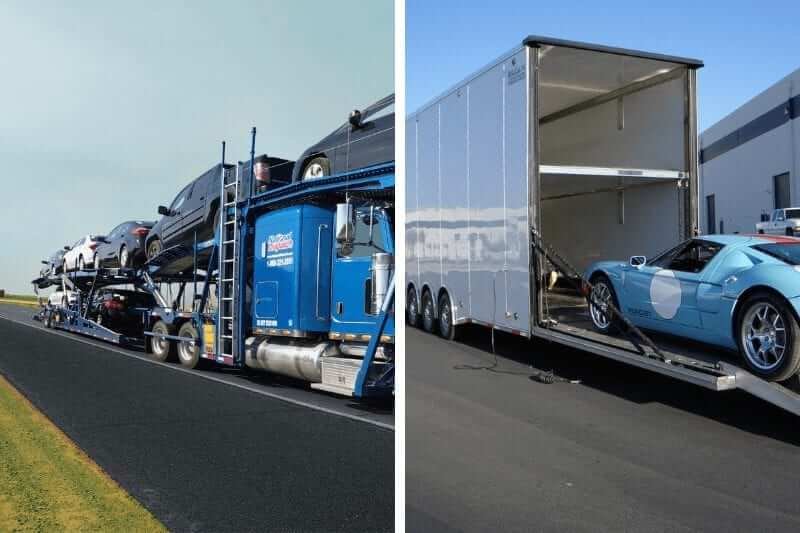
If you’re getting ready to ship a car, one of the first decisions you’ll make is enclosed vs open car transport. Both methods will get your vehicle safely from point A to point B, but they differ significantly in cost, protection, and availability.
The short version: open transport is the affordable, widely available default that works well for everyday vehicles. Enclosed transport costs more — typically 30–60% above open pricing — but shields your car from weather and road debris, making it the go-to choice for luxury, classic, and high-value vehicles.
Below, we break down exactly how each option works, what it costs, and how to decide which one is right for your vehicle.
What Is Open Car Transport?
Open transport is the industry standard — the multi-level trailers you’ve probably seen hauling several cars at once on the highway. Your vehicle rides exposed to the elements alongside other vehicles headed to nearby destinations.
It’s the method dealerships and manufacturers use to move new vehicles nationwide, and it accounts for the vast majority of car shipments in the U.S. because it’s efficient, affordable, and easy to schedule.
Open Transport Pros
- Less expensive than enclosed shipping
- Widely available, so it’s easier to book your exact pickup date
- Often faster overall delivery times, since more carriers run these routes
- A safe, proven method — the large majority of vehicles arrive damage-free
Open Transport Cons
- Vehicle is exposed to rain, sun, dust, and road debris during transit
- Slightly higher risk of minor cosmetic dings or scratches, especially on long routes
- Less personalized handling compared to enclosed service
What Is Enclosed Car Transport?
Enclosed transport loads your vehicle into a fully covered trailer with a hard top and lift gate, shielding it from weather, dirt, and flying road debris for the entire trip. Because enclosed trailers carry fewer vehicles at a time, your car also gets more space and generally more careful handling.
This method is most common for classic cars, exotics, luxury vehicles, and any car where the owner wants the extra layer of protection and peace of mind.
Enclosed Transport Pros
- Full protection from weather, road debris, and most road hazards
- Drivers are typically more experienced with handling specialty and high-value vehicles
- More personalized, white-glove service
- Often includes higher insurance coverage limits
- Hydraulic lift gates and extended ramps accommodate low-clearance vehicles that open carriers can struggle with
Enclosed Transport Cons
- Costs 30–60% more than open transport
- Fewer carriers offer enclosed service, so availability can be limited — especially during peak season (June–August)
- May require more lead time to book
- Enclosed trailers are less fuel-efficient, which factors into the higher price
Open vs Enclosed Car Transport: Side-by-Side Comparison
| Factor | Open Transport | Enclosed Transport |
|---|---|---|
| Best for | Everyday sedans, SUVs, and standard vehicles | Luxury, exotic, classic, collectible, or low-clearance vehicles |
| Typical price | Baseline rate | 30–60% more than open transport |
| Weather protection | None — fully exposed | Full protection from rain, sun, dust, and debris |
| Carrier availability | High — faster booking and pickup windows | Lower — may require more lead time |
| Vehicles per trailer | Multiple (typically 7–10) | Fewer (typically 1–4), meaning more space per car |
| Handling | Standard | More experienced with specialty/high-value vehicles |
| Insurance coverage | Standard cargo insurance | Often higher coverage limits available |
How Much More Does Enclosed Transport Cost?
Enclosed transport typically runs 30–60% more than open transport for the same route. On a 1,000-mile shipment where open transport might cost around $1,000, enclosed transport for the same vehicle would likely fall somewhere between $1,300 and $1,600.
The exact premium depends on a few things:
- Vehicle size — larger vehicles take up more of the limited enclosed trailer space
- Route — enclosed carriers are less common on less-traveled routes, which can push prices higher
- Season — enclosed transport books up faster in peak months (June–August), which can tighten availability and raise rates
- Single-car vs. multi-car enclosed trailers — a dedicated single-car enclosed trailer costs significantly more than one that carries several vehicles
Which Should You Choose?
Choose Open Transport If:
- You’re shipping a standard daily-driver sedan, SUV, or truck
- Cost and speed of booking matter more than extra protection
- Your vehicle isn’t a classic, exotic, or high-value car
- You’re comfortable with normal wear-and-tear risk from weather and road exposure
Choose Enclosed Transport If:
- You own a classic, vintage, or collector car
- You’re shipping a luxury or exotic vehicle
- Your car has low ground clearance and needs specialized loading equipment
- The vehicle has high sentimental or financial value that justifies extra protection
- You’re shipping during winter months or through regions prone to severe weather
How Weather and Season Affect Your Decision
Weather plays a bigger role in this decision than most people expect. If you’re shipping during winter — especially through regions that see snow, ice, or road salt — enclosed transport keeps your vehicle away from the debris and corrosive road spray that open trailers can’t avoid. The same goes for shipping through areas prone to dust storms, hail, or heavy rain.
If your shipment falls during a mild season and travels through fair-weather routes, open transport’s exposure risk is much less of a concern, and the cost savings usually make it the more sensible choice.
Real Cost Comparison: Open vs Enclosed by Route
To make the price gap concrete, here’s how open and enclosed transport might compare for the same routes, based on a standard sedan:
| Route | Open Transport | Enclosed Transport |
|---|---|---|
| Los Angeles to Phoenix (~370 mi) | $500 – $700 | $700 – $1,050 |
| Chicago to Dallas (~925 mi) | $800 – $1,100 | $1,150 – $1,700 |
| New York to Los Angeles (~2,800 mi) | $1,300 – $1,800 | $1,850 – $2,800 |
Larger vehicles, low-clearance cars, and peak-season shipments will push these enclosed figures toward the higher end of the range — and sometimes beyond it, depending on carrier availability.
Who Typically Chooses Each Option?
Looking at how these two methods get used in practice can help clarify which one fits your situation:
Typical Open Transport Customers
- People relocating for work or a move who are shipping a daily-driver vehicle
- Car buyers purchasing a used sedan, SUV, or truck from an out-of-state dealer
- Snowbirds shipping a standard vehicle seasonally between homes
- Dealerships and auction buyers moving inventory in bulk
Typical Enclosed Transport Customers
- Classic and vintage car owners and collectors
- Buyers and sellers of exotic or high-performance vehicles
- Owners of low-clearance sports cars that risk scraping on standard ramps
- Anyone shipping a vehicle with significant sentimental or appraised value
Booking Timelines: What to Expect
Because open transport carriers are far more common, you can typically book a pickup within a few days to a week of your target date, and same-week bookings are often possible depending on your route.
Enclosed transport, with a smaller pool of available carriers, generally benefits from booking 1–3 weeks in advance — and longer during peak moving season (June through August) when demand for enclosed trailers rises alongside demand for open transport. If your shipping date is flexible, giving your carrier a wider pickup window will also help them slot your enclosed shipment into an efficient route.
Insurance: What’s Actually Covered?
Both open and enclosed carriers are required to carry cargo insurance, but the coverage details matter more than the label. Before booking either option, ask your carrier for:
- The total coverage limit — and whether it’s enough to cover your vehicle’s full value
- What’s excluded — some policies exclude pre-existing damage or certain types of loss
- Whether you need supplemental coverage — for high-value or rare vehicles, your personal auto policy or a third-party transit policy may be worth adding on top of the carrier’s cargo insurance
Enclosed carriers often carry higher default coverage limits since they frequently transport higher-value vehicles, but this isn’t guaranteed across every company — always confirm in writing.
Common Questions About Choosing a Transport Method
Is open transport safe for a newer or more expensive car?
Yes. Open transport is how manufacturers ship brand-new vehicles to dealerships nationwide, and the large majority of shipments arrive without any damage. It’s a safe, proven method for most vehicles — enclosed transport simply adds an extra layer of protection for vehicles where that matters most.
Does enclosed transport take longer?
It can. Because there are fewer enclosed carriers on the road, it may take longer to find an available truck for your route, and enclosed trailers are generally slightly less fuel-efficient. Building in a little extra lead time when booking enclosed transport is a good idea, especially during peak season.
Can I switch from open to enclosed after booking?
Usually, yes — but pricing and availability will need to be reconfirmed, since enclosed carriers are a smaller pool. It’s best to decide upfront so your carrier can plan the right equipment for pickup day.
Is enclosed transport worth it for a normal SUV or truck?
For most everyday SUVs and trucks, open transport is the more practical choice — the extra cost of enclosed transport is hard to justify unless the vehicle has unusual value, rarity, or ground-clearance needs.
Does enclosed transport come with better insurance?
Many enclosed carriers offer higher cargo insurance limits, which makes sense given the higher-value vehicles they typically transport. Always confirm coverage limits with your carrier before booking, regardless of which method you choose.
Can I request an enclosed carrier just for peace of mind, even on a standard car?
Absolutely — there’s no rule limiting enclosed transport to luxury or classic vehicles. Some owners simply prefer the extra protection and more personalized handling, and are willing to pay the premium even for a daily-driver car. It comes down to how much that added peace of mind is worth to you.
Quick Checklist: Making Your Final Decision
- What’s the vehicle worth? Higher value or rarity leans toward enclosed.
- What’s the season and route? Winter weather or long cross-country routes add risk to open transport.
- How flexible is your timeline? Tight timelines favor open transport’s faster availability.
- What’s your budget? If the 30–60% premium is a stretch, open transport remains a safe, reliable default for most vehicles.
- Does the vehicle have low ground clearance? If so, ask about enclosed carriers with hydraulic lift gates regardless of the vehicle’s value.
Get a Quote for Either Option
Whether your vehicle calls for the affordability of open transport or the extra protection of enclosed shipping, the best way to know your exact cost is to get a personalized quote.
Get a free quote from NexGen Auto Transport and compare open and enclosed pricing side by side for your specific route and vehicle.
